
The Candidate You Need Most Probably Never Made It Past Your Algorithm
Written by Michelle Carlberg
The call came on a Tuesday morning.
A VP of Operations at a growing construction company, one I had been in conversation with for months about their hiring challenges, was frustrated. They had been searching for a project manager for eleven weeks. Their ATS had processed over 400 applications. Their internal team had reviewed the shortlist the system surfaced. Nobody was right.
“We just cannot find qualified people,” he told me.
I asked him one question.
“How confident are you that the right person actually made it through your screening process?”
There was a pause.
He did not have an answer.
That conversation happens more than most leaders realize. And the data behind it should make every hiring executive stop and reconsider how their process is actually working.
The Hiring Crisis Nobody Is Naming Correctly
Nine in ten companies failed to meet their recruiting objectives in 2025. The average company filled only half to three-quarters of its intended hires, and yet job boards were flooded and resumes were pouring in.
Read that again.
Record application volumes. Record unfilled roles.
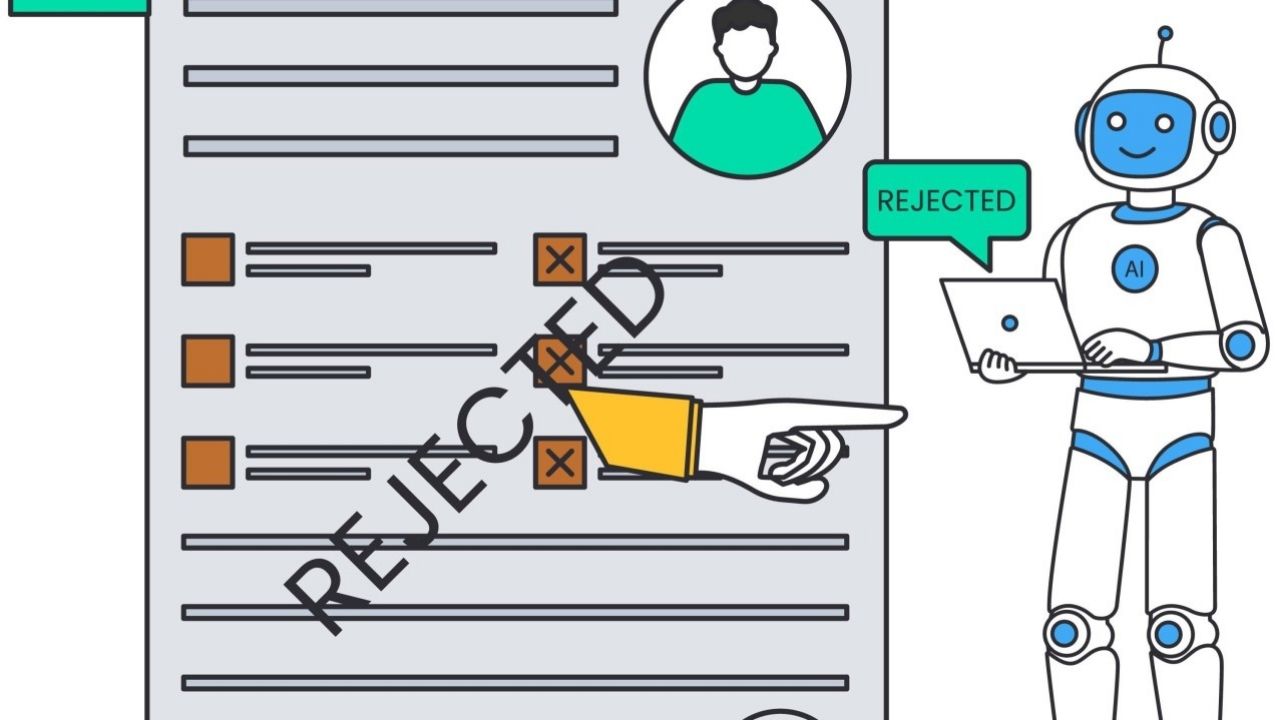
Something is broken in the middle. And that something, in most organizations, is the automated screening layer sitting between the candidate and the human being who actually makes the hire.
19 percent of organizations that use automation or AI in hiring report that their tools have overlooked or screened out qualified applicants.
Nearly one in five companies admits, when asked directly, that their AI tools are eliminating people who should have gotten an interview.
And those are only the organizations that know it is happening.
What Your Algorithm Is Actually Filtering Out
Here is the part that should concern every CEO, COO, and operations leader reading this.
The candidates most likely to be quietly eliminated by an automated screening system are not the unqualified ones…They are the experienced ones.
The person with 25 years in your industry who describes their work the way people described it fifteen years ago, before the current keyword conventions existed. The operations leader who has never needed to optimize a resume for a bot because they have always found their next role through relationships. The woman who has been advised to remove her graduation date and truncate her career history just to survive the first filter.
Nearly three-quarters of global companies are experiencing a scarcity of qualified talent, and yet two-thirds of recruiters report getting more applicants per role than ever before. HR Brew
The talent exists. The applications are coming in.
But the system is filtering out the signal along with the noise, and most organizations have no visibility into what they are losing.
This disconnect between volume and quality is something we’re seeing more frequently as automation increases, especially when systems prioritize keywords over context, as explored in AI in Recruiting: Tool or Trap?
The Cost of What You Are Missing
This is not just an operational problem. It has a financial face.
The top 10 percent of candidates are typically off the market within 10 days of starting their search. A bad hire, often the result of settling after the best candidates are already gone, can cost a company over $15,000 on average. For specialized roles, the lost revenue can reach into the hundreds of thousands… And that is before you factor in the legal exposure.
As I covered earlier in this series, the Workday class action lawsuit, now certified to include millions of applicants over age 40, is only the beginning. iTutorGroup paid $365,000 to settle EEOC charges after their AI automatically rejected older applicants. Courts are not accepting “the algorithm did it” as a defense, and neither will your future candidates.
The organizations that believe their liability ends at their own intent are wrong. If your screening tools produce discriminatory outcomes, regardless of the fact that you did not design them that way, the exposure falls on you.
Why More AI Is Not Always the Answer
There is an assumption embedded in most hiring technology conversations that more automation equals better outcomes. The data does not support that.
According to SHRM, average cost-per-hire and time-to-hire have both increased in the past three years, a period that directly correlates with increased use of generative AI in recruiting. “The AI arms race does not benefit either side,” said Nichol Bradford, executive in residence for AI and Human Intelligence at SHRM. SHRM
56 percent of firms worry that AI may inadvertently screen out qualified applicants. With the rise of AI-written resumes and cover letters, 64 percent of recruiters noticed an uptick in identical-looking, AI-generated applications in 2024 and 2025 — which actually increased their screening workload.
Here is what is actually happening inside many organizations right now.
AI is generating the job description. Candidates are using AI to optimize their resume against that description. The company’s AI is screening those AI-optimized resumes. And somewhere in that loop, the genuinely experienced, genuinely qualified, genuinely irreplaceable candidate, the one who does not spend time gaming keyword scores because they have built a career on actual results…quietly disappears.
This cycle of AI generating, optimizing, and filtering content is creating a loop that is harder for hiring teams to break, which is something we’ve explored more directly in AI Tools in Recruiting: How to Balance Efficiency and Human Connection.
And then the VP of Operations calls me and says he cannot find qualified people.
What the Best Organizations Are Doing Differently
The most successful AI implementations in recruiting do not remove humans from the process. They amplify human judgment by handling routine tasks and surfacing insights that might otherwise be missed.
The organizations that are actually winning the talent competition in 2026 share a few consistent traits.
They treat AI as a tool that requires management, not a solution that replaces judgment.
>They audit their screening outcomes regularly, asking not just how many applications were processed but who is being filtered out and why.
>They maintain human oversight at every decision point that matters.
And critically, they invest in proactive talent relationships rather than depending entirely on inbound applications.
Sourced candidates are eight times more likely to be hired than inbound applicants. Yet most organizations rely almost entirely on inbound.
The best candidates are not applying to your job posting. They are working, performing well, building something, and leading their teams. They will move for the right opportunity, presented by the right person, at the right moment.
That is not something an algorithm can replicate.
The Question Every Leader Should Be Asking Right Now
Not “how do we process more applications?”
Not “how do we automate more of the screening?”
The question is: how confident are we that the right person is actually making it through our process or even being identified?
If you cannot answer that with certainty, if you do not have visibility into what your screening tools are filtering, how they were trained, or what groups are being quietly eliminated before a human being ever sees their name…then you do not fully understand your own hiring process.
And in today’s legal and talent landscape, that is a risk most organizations cannot afford to carry.
What Partnership Changes
This is exactly why the relationship between a company and its recruiting partner matters more now than it ever has.
A true recruiting partner does not just source candidates and submit resumes. They understand your organization deeply enough to know what your automated process is likely to miss, and they maintain real relationships in your talent market with experienced professionals who will never submit a cold application through a portal, who are reachable only through trust and reputation.
They ask the questions your system cannot ask and see the candidates your algorithm was never designed to find.
And they bring the human judgment that no technology, regardless of how sophisticated, can fully replace.
Because the best hire you will make this year is probably not sitting in your ATS right now.
They are out there. Working hard. Waiting for someone to find them the right way.
Related Articles
AI in Recruiting: Tool or Trap
AI Tools in Recruiting: How to Balance Efficiency and Human Connection
How to Integrate AI Into Your Recruiting Strategy Without Losing the Human Touch