
“Resume Botox” and the AI Hiring Crisis Nobody Warned You About
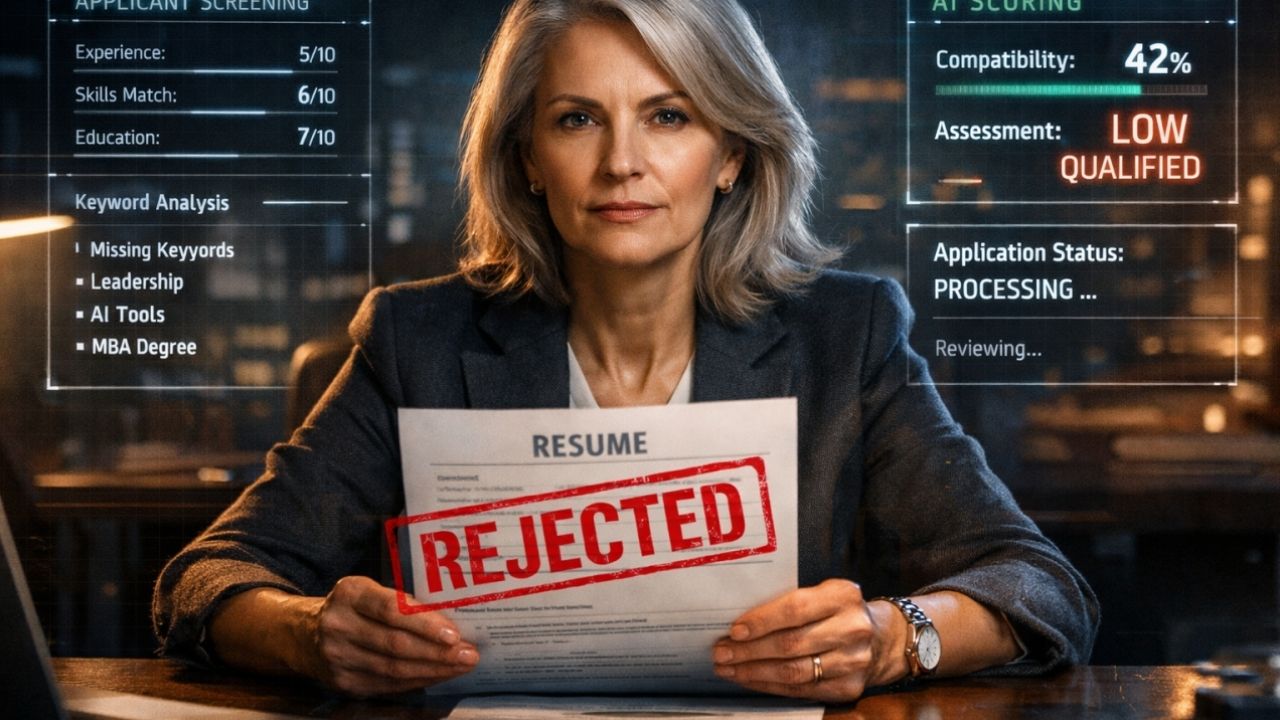
I saw a story on the news this morning that stopped me cold.
Women over 50 are being advised to erase their graduation dates from their resumes. To scrub early career accomplishments. To hide decades of hard-won experience, not because it isn’t valuable, but because an algorithm might use it against them.
They are calling it “resume botox.”
And I need to talk about it! Because this is not just a candidate problem, this is a people problem. A leadership problem. And for many companies right now, it is becoming a legal problem.
What Is Actually Happening
Here is the reality of today’s hiring landscape that most leaders have not fully reckoned with.
An estimated 75 percent of resumes never reach a human recruiter, rejected instead by applicant tracking systems programmed to filter based on keywords, career gaps, and undisclosed criteria that often correlate with age.
Seventy-five percent… mind-blowing, right?
Three out of every four candidates are gone before a single human being ever sees their name.
The introduction of AI screening has not created ageism in hiring, but it has industrialized it, making the bias faster, broader, and harder to challenge.
And women are bearing a disproportionate share of that burden.
For women, the impact is compounded by existing gender biases in pay and promotion history that these systems quietly penalize. Removing a graduation year from 1992 or truncating 30 years of experience to show only the most recent 15 has become a pragmatic survival strategy, not vanity.
Let that sink in for a moment.
A woman with 30 years of leadership experience, someone who has navigated recessions, built teams, solved problems that would have broken most people… is being told to hide it. To make herself look younger on paper, just to survive an algorithm that was never designed with her in mind.
That is not progress. That is a crisis wearing a technology badge.
How the Algorithm Becomes the Bias
I have written before about AI in hiring and how it can be a powerful tool when used thoughtfully. I stand by that.
But here is what I did not fully address, and what this story made impossible to ignore.
AI models are trained on historical hiring data, which often reflects existing biases. If past hiring patterns favored younger candidates, the AI will replicate that trend. Moreover, algorithms may use seemingly neutral factors, such as graduation year, length of experience, or even word choice, to infer an applicant’s age and penalize them accordingly. Instead of eliminating discrimination, AI can reinforce and automate it.
Understand this: the algorithm does not know it is being unfair. It does not have intent. But that does not make the outcome any less discriminatory, and it does not protect your organization from legal exposure.
More advanced AI-driven systems can analyze contextual clues: total work experience, technology or terminology used, job titles, and career progression, even without graduation dates being listed, to estimate a candidate’s age range.
In other words, even candidates who follow the advice to “hide” their age may still be filtered out. The system finds a way.
The Legal Stakes Are Real and Growing
This is where I need every business owner and hiring leader reading this to pay very close attention.
This is not a theoretical risk. It is already in federal court.
The certified collective in Mobley v. Workday includes all individuals aged 40 and over who, from September 24, 2020, through the present, applied for job opportunities using Workday’s platform and were denied employment recommendations. That is millions of potential class members, in what could be one of the largest collectives ever certified.
A federal judge allowed a job applicant’s lawsuit against Workday to move forward as a nationwide class action, ruling that the company’s AI-powered hiring tools may have had a discriminatory impact on applicants over the age of 40.
And here is the part that should concern every employer relying on AI tools:
One emerging certainty is that employers cannot hide behind the automated nature of their hiring tools at the risk of engaging in unlawful, yet unintended discrimination. Other suits have implicated the employers involved as the responsible party for ultimately sanctioning and making hiring decisions based on purportedly discriminatory AI tools.
You did not design the algorithm. You did not intend the discrimination. But if the tool you are using produces discriminatory outcomes, and you have not taken steps to audit, oversee, and correct it…you may still be liable.
The EEOC has made its position clear. Employers are responsible for ensuring their hiring tools comply with anti-discrimination laws, regardless of whether the discrimination is intentional.
To the Candidates Reading This
I see you.
The woman who built a career over three decades is now being told to hide it. The experienced professional who gets rejected in minutes by a system that never actually reads your resume. The leader who has more to offer than any algorithm is equipped to recognize.
You are not the problem.
The system has a gap…and that gap is the absence of human judgment.
Here is what I want you to know, and what I tell every candidate I work with:
Your experience is not a liability. It is your greatest asset. But in today’s environment, you have to learn how to present it in a way that both humans and algorithms can understand and receive.
That means modernizing your language. Reflecting current technology fluency. Focusing your resume on the last 10 to 15 years without apologizing for the depth of what came before.
And it means building real relationships, because networking remains the job seeker’s best strategy for connecting with potential employers and overcoming stereotypes about older workers. Your best shot at a great new job is simply showing up in person, experience and all.
The people who can advocate for you past an algorithm are the ones who already know you, respect you, and believe in what you bring.
That is why I do this work.
To the Companies and Leaders Reading This
I am going to be direct with you.
If you believe that fully automating your hiring process with AI will save you time, reduce costs, and solve your talent challenges, you are only partially right.
It can absolutely help. Used well, AI can reduce noise, speed up sourcing, and surface candidates you might have missed. I have said this before, and I mean it.
But AI without human oversight is not a recruiting strategy… It is a liability.
Approximately 88 percent of companies are already utilizing some form of artificial intelligence in candidate screening. Many of those companies have not audited their tools for bias. Others have not asked their vendors how the algorithm was trained. Most have not considered what happens when the system quietly filters out a 54-year-old woman with exactly the kind of experience their organization needs.
When a hiring algorithm quietly bins a 55-year-old applicant with deep industry relationships in favor of a less experienced candidate who happens to match a keyword profile, the company loses.
Not just legally. Operationally. Strategically. Culturally.
Research from the Boston Consulting Group and others has consistently shown that age-diverse teams outperform homogeneous ones in decision-making and innovation.
The algorithm is not finding you better candidates. It is finding you, the younger ones. And costing you the wisdom you never knew you were losing.
The Human Element Is Not Optional
I have said it before, and this story only deepens my conviction.
AI is not going away. It is going to become more embedded in hiring, not less. And that means the stakes around how we use it, with wisdom, oversight, and genuine accountability, are only going to rise.
The answer is not to abandon technology. The answer is to refuse to let it replace judgment.
Every resume that enters a hiring process represents a real person. A person who went home and worked on that document. One who took a breath before hitting submit. Someone whose livelihood, dignity, and sense of worth are tied to whether they get a call back.
An algorithm does not know that. A great recruiter does.
The human element in hiring is not an inefficiency to be automated away. It is the thing that makes hiring humane, what protects your organization legally, and what finds the candidate that no keyword search would have surfaced.
And it is what stops a woman with 30 years of experience from having to erase herself just to be seen.
Related Articles
Outsmart the Age Discrimination “Screen-Out”
The Candidate Journey: Why Work History Matters
The Hiring System Is Breaking — And Everyone Knows It