
Full-Time vs. Contract Hiring in Specialized Engineering: Same Goal, Completely Different Strategy
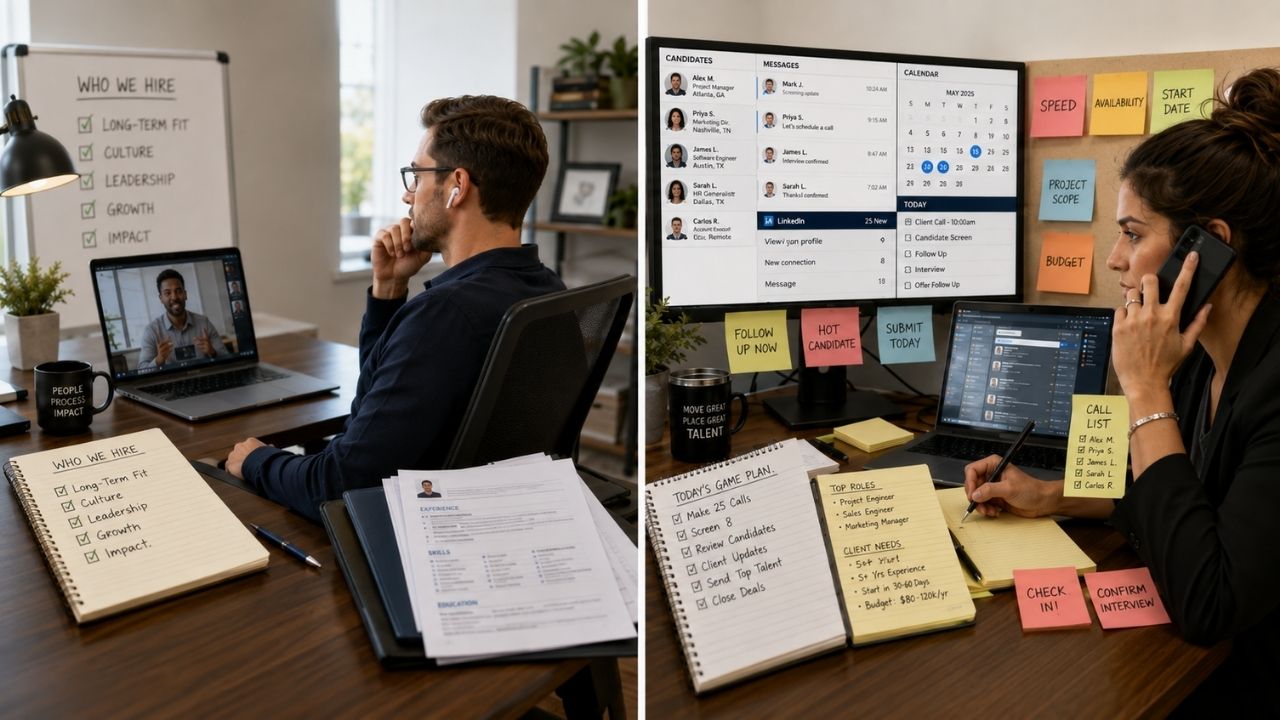
Whether you’re hiring a Principal Firmware Engineer, a 93K Application Engineer, an Embedded Software Engineer, or a Systems Architect, the objective is the same:
You have engineering work that needs to get done.
But whether that need is full-time or contract should completely change your hiring strategy.
Too many companies use the same interview process for both.
That’s a mistake.
The strategy, recruiting approach, interview process, and evaluation criteria should all be different because the business objectives are different.
Full-Time Engineering Hires Are Long-Term Investments
When you hire a specialized engineer full-time, you’re making a long-term investment.
You’re not simply hiring technical skills.
You’re investing in someone who will influence product direction, mentor junior engineers, solve complex technical problems, and become part of your engineering culture.
These are the people who will own your firmware architecture, debug your toughest embedded issues, influence hardware decisions, and help shape the next generation of your products.
You’re inviting them into your organization.
That deserves a thoughtful and intentional hiring process.
Unfortunately, many interview processes evolve as they go.
- “Who should they talk to next?”
- “Let’s see who’s available this week.”
- “I think this is the final interview… maybe.”
No.
Your interview process should already be defined before the first interview ever takes place.
- Who is the hiring manager?
- Who owns the technical evaluation?
- Who evaluates leadership?
- Who evaluates communication?
- Who are the decision-makers?
- Who has veto authority?
Every interviewer should know exactly what they’re evaluating.
And perhaps most importantly…
The engineering manager this person will report to should be one of the very first conversations.
This is the individual they’ll trust, learn from, collaborate with, and solve difficult engineering problems alongside every day.
That relationship matters.
For specialized engineering leadership, this conversation deserves a video meeting or an in-person interview.
A phone screen simply isn’t enough.
Because you’re evaluating much more than technical ability.
You’re evaluating
- Curiosity.
- Communication.
- Problem-solving.
- Leadership.
- Ownership.
- Humility.
- Coachability.
- Long-term motivation.
- Career aspirations.
How they approach engineering tradeoffs.
How they respond when things don’t go according to plan.
These are qualities you discover through meaningful conversations, not rushed interviews.
(This same long-term-investment lens is covered more broadly in Recruiting Engineers and Technical Talent in a Competitive Market.)
Contract Engineering Is Different
Contract hiring serves an entirely different business objective.
You’re not necessarily looking for someone to spend the next ten years with your company.
You’re looking for someone who can solve a very specific engineering problem.
- Maybe it’s bringing in a firmware engineer to help complete an RTOS migration.
- Adding an FPGA engineer for a product launch.
- Supporting validation during a silicon release.
- Increasing bandwidth for an embedded Linux project.
- Helping a hardware team hit a customer deadline.
- Backfilling a key engineer during parental leave.
The scope is defined, the duration is known, and the deliverables should be clear.
The question isn’t,
“Can I see this person here five years from now?”
The question is,
“Can they solve this engineering problem immediately?”
(This distinction is explored further in Contract Recruiting in Tech: Filling Skills Gaps Without Slowing Growth.)
Speed Becomes the Competitive Advantage
For contract recruiting…
Speed matters.
The best engineering contractors don’t stay available very long.
Experienced embedded consultants, firmware developers, FPGA specialists, and validation engineers are constantly being contacted.
Many accept projects within a few days.
If your interview process stretches across multiple weeks, you’ve probably lost them.
That doesn’t mean you lower your standards.
It means you change what you’re evaluating.
- Can they perform the work?
- Have they solved similar technical problems before?
- Can they start when you need them?
- Do they understand the project scope?
- Will they fit within the budget?
- Can they commit to the project’s duration?
Those questions can often be answered much faster than determining whether someone should become a permanent member of your engineering organization.
(This scarcity is exactly what’s covered in The Hidden Talent Market in Embedded & Firmware Engineering (And Why Now Is the Time to Hire).)
The Recruiting Strategy Changes Too
The recruiting process itself is completely different.
For full-time engineering searches, my recruiting approach is significantly more consultative.
I’m identifying engineers who are not actively looking and…
- Building relationships.
- Understanding what motivates them.
- Discussing long-term career growth.
- Evaluating leadership style.
- Talking about product ownership.
- Understanding family considerations, relocation, equity, compensation, and what would genuinely cause someone to leave a stable engineering position.
Finding great full-time engineers isn’t a volume game.
It’s about precision.
It’s about building trust over time.
Contract recruiting is almost the opposite.
- The pace accelerates dramatically.
- More outbound calls.
- More LinkedIn outreach.
- More referrals.
- More conversations.
- More daily activity.
Because timing matters.
I’m identifying engineers who are immediately available, technically capable, interested in project work, and able to start quickly.
The qualification process is still thorough, but it’s focused.
Can they solve this specific engineering problem?
Can they start immediately?
Have they worked with this technology before?
Do they understand the scope?
Can they complete the project successfully?
Contract recruiting becomes a game of responsiveness and execution.
Efficiency vs. Speed
This is one of the biggest distinctions I see in specialized engineering hiring.
For full-time hiring…
Efficiency wins.
Not speed.
An efficient process is intentional.
Everyone knows their role, interviewers are aligned, feedback is timely, and decisions are made confidently.
The goal isn’t to rush.
The goal is to make the right hiring decision without unnecessary delays.
For contract hiring…
Speed wins.
Every unnecessary interview, scheduling delay, internal meeting, extra approval, and “let’s wait until next week” dramatically reduce your chances of landing the best contractor.
Different Hiring Models. Different Recruiting Strategies.
At the end of the day, both hiring models solve the same business problem:
Engineering work needs to get done.
But the strategy should never be the same.
Full-time hiring is about building your engineering team for the future.
Contract hiring is about solving today’s engineering challenges.
One requires deeper conversations.
The other requires faster execution.
One prioritizes long-term fit.
The other prioritizes immediate technical capability.
One rewards efficiency.
The other rewards speed.
Understanding the difference is what separates companies that consistently hire exceptional engineering talent from those that lose great candidates to organizations that know exactly what they’re looking for and move accordingly.
(For the broader, cross-industry version of this same question, see Contract Recruiting vs Direct Hire: What Actually Changes.)
Related Articles