
The Gift of a Strong Job Description: How to Write a Role That Attracts the Right Talent
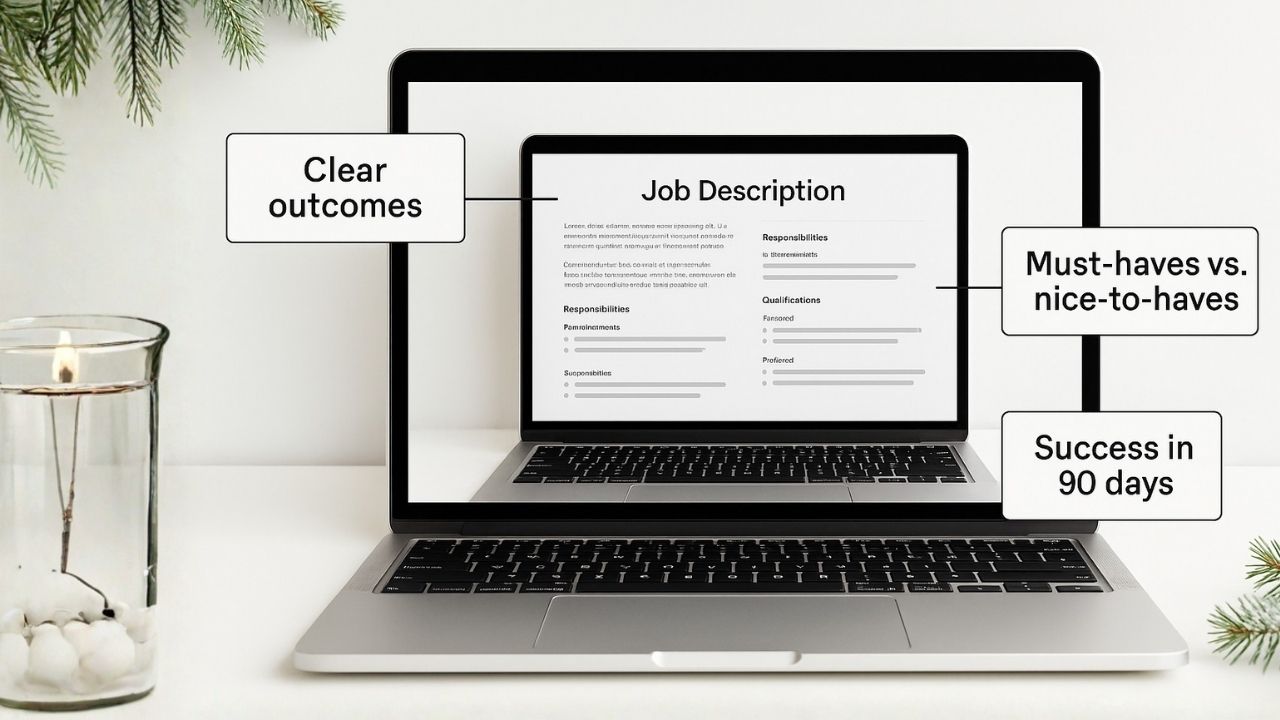
How to write a job description that actually attracts the right talent has become one of the most overlooked advantages in hiring. A job description isn’t busywork, and it isn’t something to rush through at the last minute. It’s the first impression a candidate gets of your company, the filter that determines who applies, and the best tool hiring managers have to create alignment before the interview process even begins.
A vague or outdated job description invites confusion. It inflates your applicant pool with people who are not equipped for the work. It forces hiring teams to spend time sorting instead of selecting. And it often leads to early turnover because expectations were never clearly set. A strong job description does the opposite. It clarifies, sharpens, and communicates exactly what the role requires and why it matters—so only the right people lean in.
Why Strong Job Descriptions Matter More Than Ever
Today’s job seekers are discerning. They want to understand the purpose behind the role, the outcomes they’ll be responsible for, and the kind of environment they’ll operate in. When these details are missing, high-performing candidates move on quickly. They are not drawn to ambiguity. They are drawn to clarity, impact, and alignment.
Teams also benefit. A well-defined role helps hiring managers calibrate expectations, improves interview consistency, strengthens internal collaboration, and sets the next hire up for success from the first day. It is much easier to hire well when everyone understands the same picture of what “great” looks like.
Lead with Outcomes, Not Tasks
The most effective job descriptions begin with outcomes. Tasks describe activity. Outcomes describe impact. Great candidates care about impact. Hiring managers often default to tasks because they feel tangible (“manage calendars,” “attend meetings,” “prepare presentations”), but tasks alone do not paint a complete picture of success.
An outcome tells a candidate what they must accomplish and why it matters. For example, instead of listing, “Prepare weekly reporting,” an outcome would say, “Deliver weekly reporting that improves visibility and strengthens decision-making across the team.” Instead of stating, “Participate in workflow improvements,” a stronger outcome would be, “Improve operational workflows to reduce cycle time and eliminate roadblocks.”
Shifting from tasks to outcomes immediately elevates the quality of applicants. Candidates who are motivated by results recognize themselves in outcome-based language. Candidates who simply want responsibilities to check off a list often do not.
Clarify What Is Required Versus Preferred
Another common issue is blending essential skills with optional ones. When everything is labeled as a requirement, the job appears more rigid and harder to qualify for. When too many skills are listed as “nice to have,” the expectations become ambiguous. Hiring managers should clearly define the core competencies the role cannot function without and then separately identify the traits or experience that would enhance performance.
This clarity helps candidates self-select. It also helps interviewers evaluate. It eliminates unnecessary debate inside the hiring team. Most importantly, it ensures the final hire is set up with realistic expectations.
Use Plain Language Instead of Buzzwords
Over time, job descriptions tend to accumulate jargon. Phrases like “dynamic self-starter” or “wear multiple hats” are so common they’ve lost meaning. Candidates skip over them because they do not signal anything concrete. When writing a job description, the clearest language is always the strongest. Straightforward sentences, direct expectations, and simple terminology eliminate confusion and respect a candidate’s time.
Plain language also supports transparency. It invites more thoughtful applications because candidates understand the realities of the role rather than guessing at them. When expectations are clear, communication improves before the first conversation even begins.
Include the Salary Range Whenever Possible
Salary transparency has become a major factor in whether candidates choose to apply. Postings with clear compensation ranges consistently outperform those without them. This transparency demonstrates respect, reduces friction early, and helps both the candidate and the hiring team determine alignment before moving into interviews. Companies that include compensation tend to attract more serious applicants and avoid late-stage surprises that derail offers.
How to Set Expectations with a “Success in 90 Days” Section
One of the most valuable sections a job description can include is a simple, clear description of what success looks like in the first ninety days. It forces hiring managers to define what truly matters, and it gives candidates a realistic view of what they will be accountable for.
Examples of a “Success in 90 Days” section might include language such as:
Own weekly reporting and strengthen operational visibility across the team.
Improve current workflows to eliminate bottlenecks and increase efficiency.
Build meaningful alignment with internal stakeholders and establish a consistent communication rhythm.
These statements filter in the candidates who thrive on structure, clarity, and measurable impact. They also filter out candidates who are searching for a role rather than a responsibility.
A Strong Job Description Builds a Strong Hiring Process
When a job description is clear, outcome-based, and honest, the downstream benefits are immediate. Interviews become more consistent. Candidate screening becomes sharper. Offers are easier to align. And once the person is hired, onboarding becomes smoother because expectations were already established in writing.
This is why a strong job description is a strategic asset, not an administrative task. It accelerates hiring, strengthens alignment, and sets the foundation for long-term retention. When hiring managers invest the time upfront, they gain speed and clarity throughout the entire process.
What Hiring Managers Should Do Next
Take time to review the job descriptions currently in circulation. Remove outdated tasks. Rewrite overly broad sections. Replace jargon with clarity. Most importantly, shift the focus from activity to impact. The companies that win top talent are the ones that communicate with precision, honesty, and purpose—before the first conversation ever happens.
A strong job description is a gift to both the hiring manager and the candidate. It reduces noise. It increases alignment. And it ensures that the people who apply are the people who can truly succeed.