
Fixing Your Interview Process: How Strong Structure Improves Hiring Outcomes
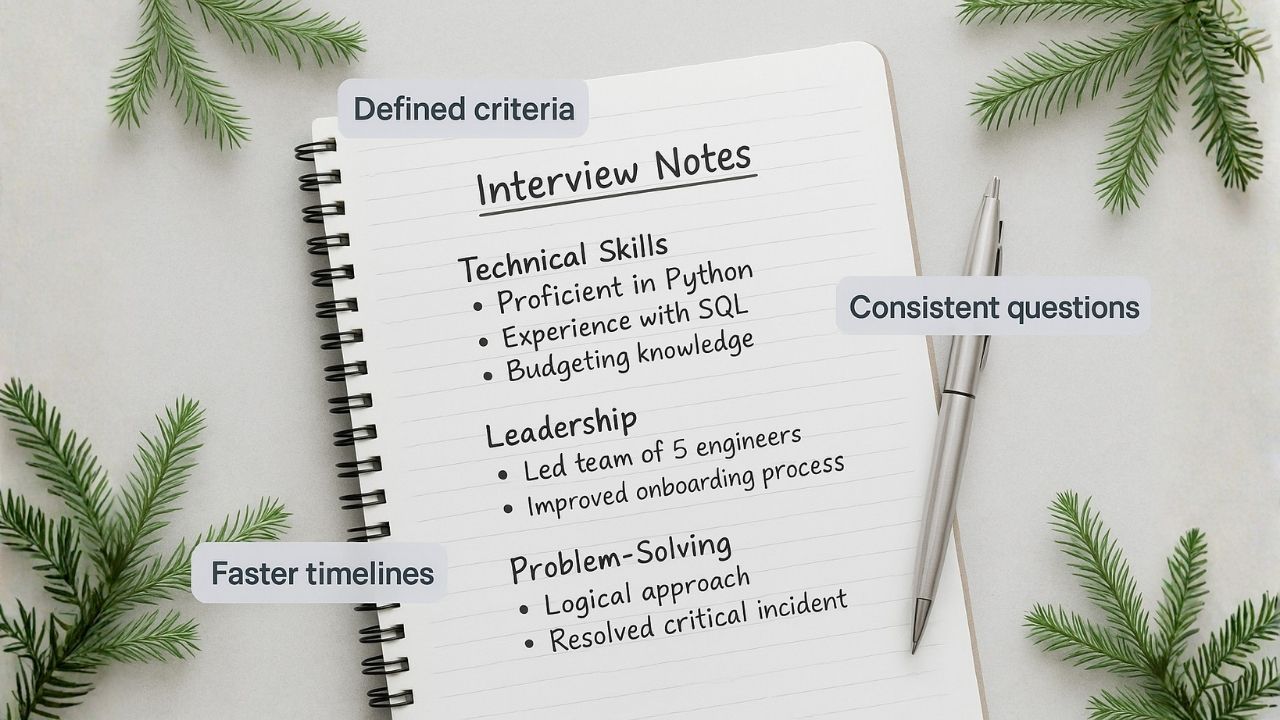
Creating a strong hiring foundation begins with understanding how interview process improvement shapes the speed, accuracy, and overall success of bringing in top talent. When interviews stretch on too long, lack clarity, or involve too many decision-makers, the best candidates quietly disappear. High performers do not wait around. They move quickly, evaluate decisively, and expect employers to operate with the same level of clarity and urgency—especially heading into 2026.
Companies that want to hire better talent next year must treat the interview process as a competitive advantage. A structured, intentional, and well-communicated interview flow not only improves the candidate experience but also increases hiring precision and reduces avoidable delays. This is where intentional interview process improvement becomes a powerful driver of stronger outcomes.
Why Speed Matters in Today’s Hiring Market
Top talent consistently accepts offers within ten to twenty-one days, which means any slowdown creates risk. Delays invite competing companies to step in. Long interview rounds cause fatigue. Vague expectations confuse candidates at exactly the time when they’re trying to assess whether your team is where they want to build their future.
The impression your company leaves during interviews matters. When hiring managers move quickly, communicate clearly, and stay aligned, candidates view the organization as structured, decisive, and respectful of their time. A slow or disorganized approach sends the opposite signal, often unintentionally suggesting friction, complexity, or internal misalignment. In a competitive market, these cues influence a candidate’s final decision.
How Interview Process Improvement Strengthens Hiring Decisions
A thoughtful interview process is built on clarity. Hiring managers should know exactly what they are evaluating. Candidates should understand what each step accomplishes. Stakeholders should be aligned on expectations before a single interview is scheduled.
One of the simplest ways to advance interview process improvement is to limit the number of interview rounds. Many companies believe adding more steps reduces risk, but research shows too many conversations lead to inconsistent evaluations and higher candidate drop-off. Companies that keep their process to three or four structured steps see stronger conversion rates and more confident hiring decisions.
Equally important is aligning decision criteria before the first interview ever begins. Without this alignment, each interviewer forms their own interpretation of what “qualified” means. This creates contradictory feedback and slows down the final decision. When hiring teams define required skills, preferred traits, and performance outcomes upfront, interviews become sharper, faster, and far more consistent.
Finally, quick feedback is essential. Committing to twenty-four to forty-eight hour follow-up after every interview signals professionalism and positions your company as a serious, candidate-first organization. When communication is tight, candidates stay engaged and hiring teams stay on track.
Interview Process Improvement Through Strong Structure
A streamlined interview process does more than remove unnecessary steps—it increases accuracy while reducing friction. The four-step structure below reflects a balance of efficiency, evaluation depth, and strong candidate experience.
The first step is the introductory call. This conversation confirms foundational skills, evaluates motivators, and ensures alignment between candidate goals and the role’s purpose. It saves both sides time and sets expectations from the beginning.
The next step is the hiring manager interview. This is the heart of the evaluation. Hiring managers should use a structured question set, clear criteria, and a consistent framework to assess technical skills, problem-solving ability, and overall performance potential.
A panel or peer interview follows. This step is essential for understanding how the candidate interacts with others, communicates across functions, and fits within the broader team environment. Consensus among every interviewer isn’t the goal—perspective is.
The final conversation should focus on alignment and clarity. This step covers expectations, compensation, timelines, and mutual fit. A strong final interview builds trust and reduces uncertainty before an offer is extended. It also ensures both sides walk away confident.
Where Most Interview Processes Break Down
Even companies with good intentions experience gaps that weaken their hiring outcomes. The most common issues include too many interview steps, lack of internal alignment, unclear expectations between interviewers, and slow communication loops. When these problems compound, candidates lose interest, hiring managers grow frustrated, and decisions arrive too late.
These breakdowns are exactly what interview process improvement aims to eliminate. When hiring teams strengthen structure, simplify steps, and clarify responsibilities, they remove the friction points that slow everything down. As a result, companies make faster, better decisions and attract stronger candidates who respect the process.
What Hiring Managers Can Do Right Now to Improve Their Process
Strengthening interview effectiveness starts with internal clarity. Before opening a role, gather stakeholders and define the required skills, preferred traits, and performance expectations. This ensures every interviewer evaluates the same criteria.
Next, simplify the interview structure. Remove redundant conversations, combine steps where appropriate, and focus on the interviews that provide the most meaningful insight. Quality, not quantity, drives strong hiring decisions.
Finally, commit to a reliable communication rhythm. Tell candidates what to expect. Provide updates quickly. Close the loop after each step. Candidates value clarity as much as companies do, and the teams that communicate well set themselves apart.
Strong Process, Stronger Hires
Improving the interview process is more than a hiring efficiency exercise. It signals the kind of organization you are—capable, aligned, and intentional. When candidates experience a structured, timely, and respectful process, they carry those impressions into the offer stage and beyond.
Interview process improvement helps companies hire with confidence. It shortens timelines, improves decision quality, and elevates the candidate experience. And as teams prepare for 2026, the organizations that invest in stronger interview processes today will be the ones securing the best talent tomorrow.