
What Operations Candidates Look for Before Saying Yes
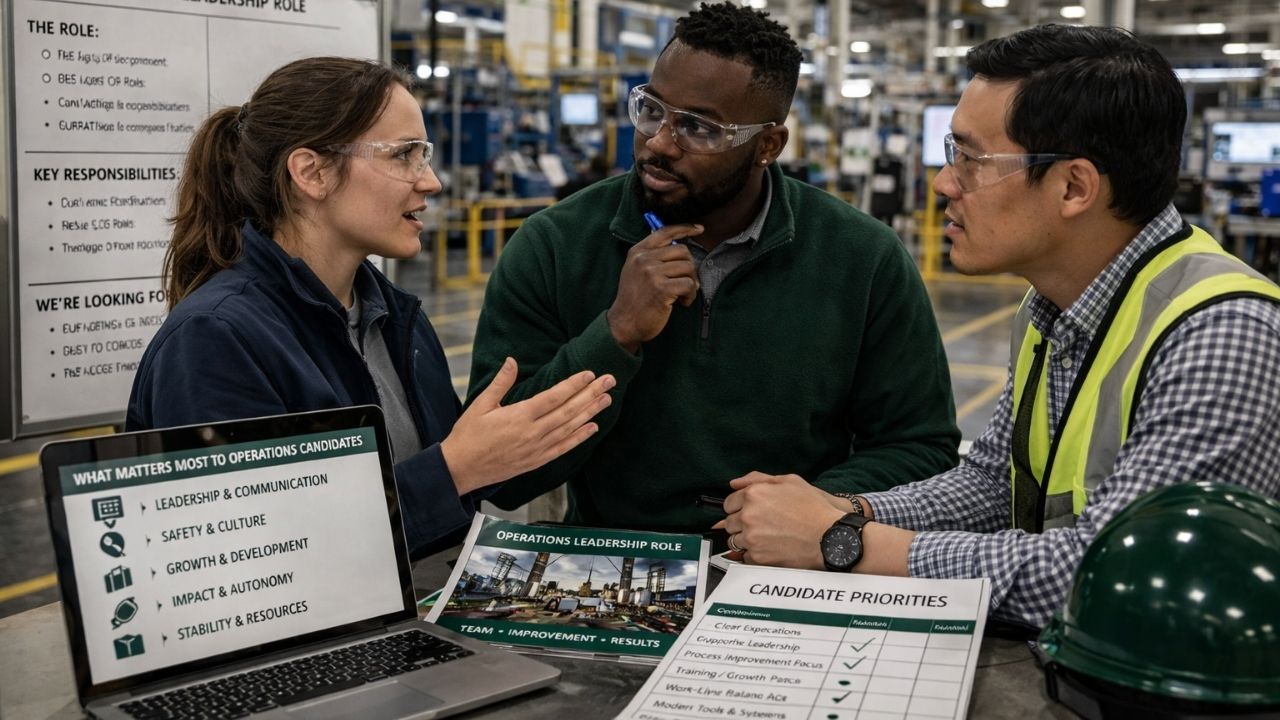
Hiring in manufacturing and plant environments has changed. Operations candidates are not just evaluating compensation or title. They are assessing stability, leadership credibility, safety culture, and whether the organization is actually positioned to succeed. This shift is becoming more common across industrial hiring environments, especially in tight labor markets, which is explored in Recruiting Manufacturing and Operations Talent in Tight Labor Markets. When those signals are unclear, strong candidates hesitate. As a result, timelines stretch and hiring momentum disappears.
This is one reason roles often stall in industrial environments. The decision is not only about the job. It is about the operating environment candidates will inherit. That is also why many companies experience longer timelines, which is explored further in Why Manufacturing Roles Take Longer to Fill. The strongest operations professionals move carefully because they understand they will inherit systems, processes, and leadership dynamics that directly impact their success.
Plant stability matters more than job title
Experienced operations professionals evaluate whether the plant is stable before they seriously consider an offer. Stability signals predict whether the role will be manageable or constantly reactive. Candidates want to know if production schedules are realistic, if staffing levels are consistent, and whether leadership understands operational constraints.
When plants are running in constant firefighting mode, candidates recognize the signs quickly. They ask about backlog, overtime frequency, turnover, and maintenance delays. These questions are not casual. They help candidates determine if they are walking into a controlled environment or an operational crisis.
This is also where leadership alignment becomes visible. If different interviewers describe different priorities, candidates assume direction is unclear. That uncertainty often leads to hesitation. The connection between leadership clarity and hiring outcomes is explored more deeply in Why Plant Leadership and Hiring Are Connected.
Operations professionals are measured by outcomes. Therefore, they want to understand if success is achievable. If expectations appear unrealistic, candidates often disengage before an offer is extended.
Safety culture is evaluated immediately
Safety is one of the first things experienced operations candidates evaluate. It signals discipline, leadership commitment, and operational maturity. Candidates observe whether safety is discussed proactively or only mentioned when prompted. They also pay attention to how leaders talk about incidents, near misses, and compliance.
A mature safety culture signals process discipline. A reactive safety culture suggests operational instability. Candidates know the difference. If safety feels like an afterthought, candidates assume other systems are also inconsistent.
This connects directly to hiring criteria. Many organizations say they want reliability and discipline, but their environment does not support those behaviors. The hiring implications of this disconnect are covered in Hiring for Reliability, Safety, and Process Discipline. Candidates are evaluating whether the organization truly values those traits.
When safety is strong, candidates see predictable operations. When safety is weak, candidates anticipate constant disruption. That expectation influences whether they continue through the process.
Leadership accessibility influences acceptance decisions
Operations candidates expect to work closely with plant leadership. They want visibility into how decisions are made, how conflicts are handled, and how priorities shift during production pressure. Leadership accessibility becomes a major factor in whether candidates feel confident accepting a role.
Candidates often look for signals such as whether leaders understand floor-level challenges. They evaluate whether leadership discusses people, process, and performance in balanced ways. If leaders only focus on output without discussing sustainability, candidates assume the role will become reactive.
Decision speed also communicates leadership style. When interview cycles stretch without clarity, candidates interpret that as indecision. This is one reason roles lose momentum, which is discussed in When Manufacturing Hiring Breaks Down Internally. Slow decision making often signals internal alignment issues.
Operations professionals prefer environments where leadership makes clear decisions and communicates expectations consistently. When that is present, candidates move faster. When it is missing, they slow down.
Equipment condition signals operational maturity
Operations candidates pay close attention to equipment condition. They ask about maintenance programs, downtime frequency, and capital investment plans. These questions reveal whether the organization prioritizes long-term stability or short-term output.
Well-maintained equipment suggests structured planning. Poorly maintained equipment suggests constant reactive work. Candidates understand that equipment reliability directly affects staffing, scheduling, and production quality.
This also influences their perception of success. If equipment is unreliable, candidates expect constant escalation. That expectation increases perceived risk. When perceived risk increases, candidates often continue exploring other opportunities.
Equipment condition also connects to plant leadership. Candidates often ask who owns maintenance strategy and how decisions are prioritized. When answers are unclear, candidates assume operational alignment is weak. That assumption affects acceptance rates.
Staffing levels and workload expectations
Operations candidates evaluate whether staffing levels support realistic production goals. They ask about vacancy rates, overtime requirements, and turnover. These questions help them understand whether the plant is adequately staffed or consistently stretched.
Consistent overtime can signal either growth or instability. Candidates look for context. If overtime is structured and planned, it suggests strong demand. If overtime is unpredictable, it suggests staffing gaps.
Candidates also assess whether leadership acknowledges workload realities. If leadership minimizes staffing challenges, candidates assume expectations may be unrealistic. That uncertainty often leads to hesitation.
This dynamic also contributes to longer hiring timelines. Candidates want clarity before committing. That is why hiring cycles often extend in industrial environments, as discussed in Why Manufacturing Roles Take Longer to Fill.
Operations professionals know they will be accountable for performance. Therefore, they want to understand if they will have the resources to succeed.
Process discipline is a major decision factor
Experienced operations candidates evaluate process discipline carefully. They look for structured production planning, standardized work, and consistent communication. These elements indicate whether the plant operates predictably.
Candidates often ask about production planning cadence, daily management routines, and escalation processes. These questions reveal whether the environment supports structured decision making.
If processes are inconsistent, candidates anticipate constant firefighting. That expectation reduces confidence. When confidence drops, candidates slow down or withdraw.
Process discipline also reflects leadership expectations. Candidates evaluate whether leaders enforce standards consistently. If enforcement varies, candidates assume performance expectations may also shift.
This is why organizations seeking disciplined operators must demonstrate disciplined environments. Otherwise, candidates perceive a mismatch.
Career path and long-term stability
Operations candidates evaluate whether the role offers long-term stability. They want to understand growth potential, leadership structure, and succession planning. These elements influence whether the opportunity feels temporary or sustainable.
Candidates often ask about internal promotions, leadership tenure, and organizational growth. These questions reveal whether the organization invests in long-term development.
If career progression is unclear, candidates may hesitate. They prefer roles where success leads to expanded responsibility. Without that visibility, they may continue exploring alternatives.
Stability also affects compensation expectations. Candidates may accept moderate compensation if long-term growth is clear. Conversely, they may decline higher compensation if stability appears uncertain.
Communication during the hiring process
The hiring process itself communicates operational culture. Operations candidates evaluate responsiveness, clarity, and organization. If scheduling is inconsistent, candidates assume operational discipline may also be inconsistent.
Candidates also observe whether interviewers share aligned expectations. Misalignment signals internal friction. That friction raises concerns about decision making.
When communication is clear and structured, candidates feel confident. When communication is fragmented, candidates become cautious. This pattern often contributes to stalled searches, which is examined further in When Manufacturing Hiring Breaks Down Internally.
The hiring process is often the first operational system candidates experience. It shapes their perception of the organization.
Compensation structure versus operational reality
Compensation matters, but structure matters more. Operations candidates evaluate whether compensation aligns with workload expectations. They consider overtime, shift requirements, and performance metrics.
If compensation assumes ideal conditions while the plant operates under constant pressure, candidates view the offer skeptically. They prefer compensation that reflects operational reality.
Candidates also assess whether incentives align with controllable outcomes. If metrics depend on factors outside their control, candidates perceive risk. That perception influences acceptance decisions.
Clear compensation structure reduces uncertainty. Reduced uncertainty increases acceptance rates. Many of these evaluation considerations, including risk, expectations, and offer alignment, are addressed in Manufacturing Hiring FAQ: Answers to the Most Common Plant Hiring Challenges, particularly around what influences acceptance decisions.
Location and shift expectations
Manufacturing roles often include shift requirements. Operations candidates evaluate whether schedules are sustainable. They consider commute distance, shift rotation, and weekend expectations.
Candidates often prefer predictable schedules. Rotating shifts introduce complexity. When shift expectations are unclear, candidates hesitate.
Location also affects decision making. Candidates may accept longer commutes for stable environments. However, they rarely accept unstable environments regardless of location.
Shift expectations and location combine to influence acceptance decisions. Clarity in these areas helps maintain momentum.
Decision speed signals organizational confidence
Operations candidates pay attention to decision speed. Fast, structured decisions signal alignment. Slow decisions signal uncertainty.
Candidates often interpret delays as internal disagreement. That perception reduces confidence. When confidence drops, candidates explore other opportunities.
This is particularly important in competitive markets. Strong operations professionals often evaluate multiple roles simultaneously. Delays increase the likelihood of losing candidates.
Decision speed reflects leadership clarity. When leadership is aligned, hiring moves efficiently. When alignment is missing, hiring slows.
Operational credibility drives acceptance
Operations candidates ultimately decide based on credibility. Leadership understanding, system support, and realistic expectations all shape whether candidates believe success is achievable.
Credibility builds confidence. Confidence drives acceptance. When credibility is unclear, candidates hesitate.
This is why operations hiring differs from other roles. Candidates are evaluating not just the job, but the operating environment. They want to understand whether success is achievable. This type of evaluation often becomes more important in specialized environments, where hiring decisions carry broader operational impact, as discussed in What Makes a Role Truly Hard to Fill.
Organizations that communicate operational maturity attract stronger candidates. Conversely, when expectations, leadership alignment, and plant stability remain unclear, acceptance rates typically drop.
Operations candidates are not only choosing a role. They are choosing the environment they will be accountable for improving. That decision requires confidence, clarity, and leadership alignment.
Related Articles
Recruiting Manufacturing and Operations Talent in Tight Labor Markets
Why Manufacturing Roles Take Longer to Fill
Hiring for Reliability, Safety, and Process Discipline
Why Plant Leadership and Hiring Are Connected
When Manufacturing Hiring Breaks Down Internally
Manufacturing Hiring FAQ: Answers to the Most Common Plant Hiring Challenges
What Makes a Role Truly Hard to Fill