
Why Plant Leadership and Hiring Are Connected
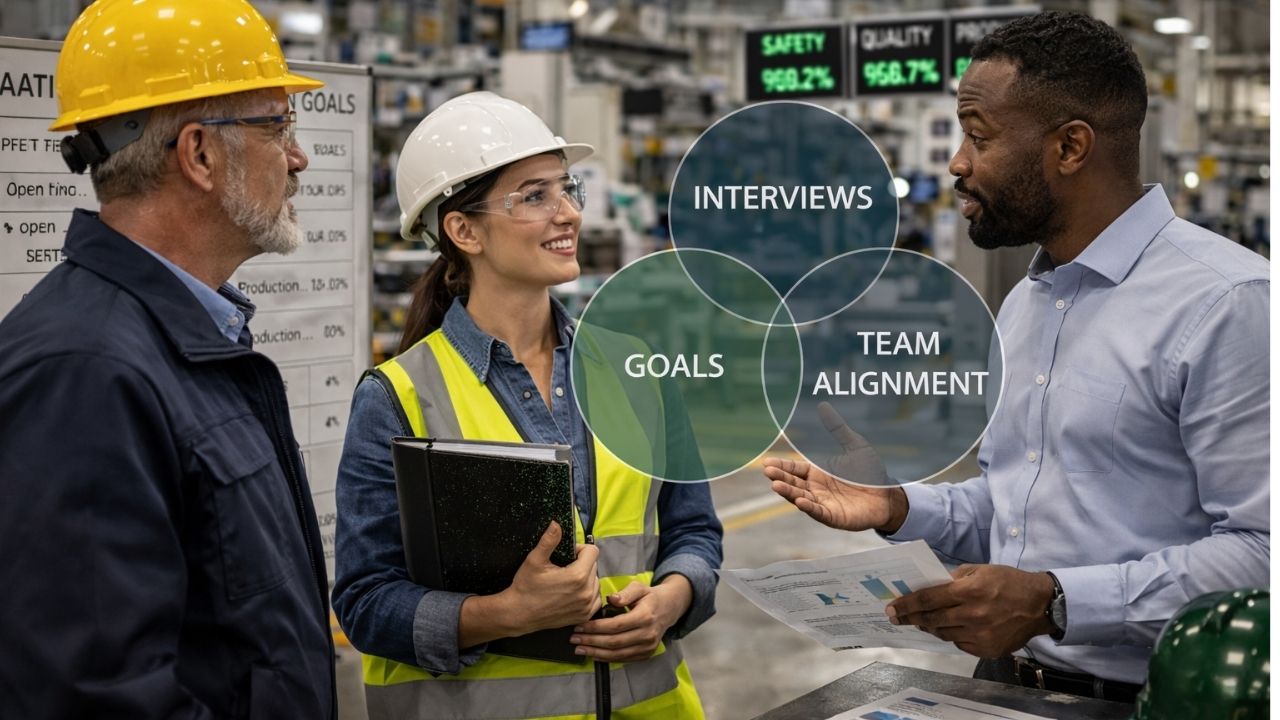
Plant leadership and hiring decisions are closely connected in manufacturing environments. Leadership defines expectations, operational priorities, and performance standards long before candidates enter the process. When leadership alignment is strong, hiring tends to move efficiently. When leadership direction is unclear, hiring slows, candidate confidence drops, and decisions become more difficult.
This connection is particularly important in industrial environments where leadership behavior directly influences safety, reliability, and production stability. Candidates are not only evaluating a job. They are evaluating the leadership environment they will inherit. That evaluation shapes engagement, decision timelines, and acceptance rates.
In competitive labor markets, leadership clarity becomes even more important. Organizations competing for experienced supervisors, maintenance leaders, and operations managers must demonstrate operational direction. This broader hiring challenge is discussed in Recruiting Manufacturing and Operations Talent in Tight Labor Markets, where leadership credibility becomes a major factor in attracting manufacturing talent.
Leadership alignment defines hiring criteria
Plant leadership determines what success looks like. Those expectations shape the hiring criteria used to evaluate candidates. When leadership priorities are aligned, hiring teams can evaluate candidates against consistent standards. Feedback becomes easier to interpret and decisions move forward more confidently.
Misalignment creates immediate friction. One leader may prioritize output while another emphasizes safety discipline. A third stakeholder may focus on people leadership. Without alignment, candidates receive mixed signals during interviews. Evaluation criteria shift, and hiring teams struggle to determine which attributes matter most.
This often happens when job descriptions are written before leadership alignment occurs. Interviews then become the place where expectations are debated. Candidates notice inconsistencies and may question whether the organization has a clear direction.
Leadership alignment should occur before the search begins. When plant leaders agree on priorities, hiring becomes more structured and predictable. Evaluation becomes focused and decision making improves.
Candidates evaluate leadership before accepting roles
Operations candidates often prioritize leadership quality over job details. They want to understand how decisions are made, how priorities shift, and how leaders respond to operational challenges. These factors influence whether candidates believe they can succeed.
Candidates frequently ask about staffing levels, production pressure, and escalation paths. Leadership responses shape perception. Realistic answers signal operational maturity. Overly optimistic responses create uncertainty.
This evaluation is explored in What Operations Candidates Look for Before Saying Yes, where leadership credibility and stability influence acceptance decisions. Candidates want to join environments where expectations are achievable and leadership support is consistent.
Strong leadership attracts candidates. Weak leadership discourages engagement. This relationship directly connects hiring outcomes to leadership quality.
Leadership credibility influences team adoption
Hiring decisions in plant environments affect entire teams. Operators, technicians, and supervisors evaluate new leaders quickly. If credibility is weak, adoption slows and performance suffers. Hiring teams must consider whether candidates can establish trust on the floor.
Credibility comes from both experience and behavior. Candidates who demonstrate operational understanding often build trust faster. Those who rely heavily on authority may encounter resistance.
Plant leadership must align on what credibility looks like. Some environments value hands-on experience. Others prioritize structured leadership. Without alignment, hiring decisions become inconsistent.
This is why stakeholder involvement matters. Production, maintenance, and quality leaders each evaluate credibility differently. Their combined input reduces risk.
Decision speed reflects leadership clarity
Hiring timelines often mirror leadership alignment. When plant leadership shares expectations, decisions move forward efficiently. Interview feedback aligns and offers are extended quickly.
When leadership priorities differ, decisions slow. Additional interviews are scheduled. Feedback becomes inconsistent. Candidates wait for clarity.
Delays increase the risk of losing strong candidates. Manufacturing professionals often evaluate multiple opportunities. When decision making stretches, candidates may accept other roles.
Leadership clarity does not mean rushing. It means alignment. When expectations are clear, hiring becomes more efficient without sacrificing evaluation depth.
This dynamic also contributes to extended timelines discussed in Why Manufacturing Roles Take Longer to Fill, where deeper evaluation and stakeholder alignment naturally extend hiring processes.
Plant leadership sets operational tone
Operational culture flows from leadership behavior. Leaders define how safety, reliability, and accountability are prioritized. Candidates observe these signals during interviews.
Leaders who emphasize consistency create structured environments. Candidates who value discipline often prefer these settings. Leaders who focus only on output may create reactive environments.
Hiring teams must evaluate cultural alignment carefully. Candidates assess whether leadership expectations match their working style. Misalignment increases turnover risk.
Operational tone also affects retention. Consistent leadership creates predictable environments. Predictability supports engagement and performance.
Cross-functional alignment depends on leadership
Manufacturing operations rely on collaboration between production, maintenance, quality, and logistics. Plant leadership coordinates these functions. Hiring decisions must reflect this complexity.
When leadership alignment is strong, cross-functional collaboration improves. Hiring teams evaluate candidates with shared expectations. Interview feedback becomes more consistent.
When alignment is weak, collaboration suffers. Candidates receive conflicting input. Decision making slows as stakeholders debate priorities.
Candidates often detect this during interviews. Different leaders may describe different expectations. Candidates interpret this as operational misalignment. Engagement often declines.
Leadership alignment reduces this risk and improves hiring outcomes.
Leadership stability affects candidate confidence
Candidates evaluate leadership stability before accepting roles. They want to understand turnover, tenure, and organizational direction. Frequent leadership changes create uncertainty.
Stable leadership signals predictable expectations. Candidates view stability as a sign of operational maturity. They expect clearer communication and stronger team alignment.
Unstable leadership suggests shifting priorities. Candidates anticipate inconsistent expectations and potential disruption. This perception reduces confidence.
Leadership stability also influences onboarding success. New hires integrate more easily when leadership direction is consistent. Frequent leadership changes complicate ramp-up.
Hiring decisions reflect operational risk tolerance
Plant leadership determines how much risk is acceptable in hiring decisions. Some leaders prioritize speed. Others prioritize thorough evaluation. This choice shapes hiring outcomes.
When leadership prioritizes speed without alignment, mis-hires become more likely. When evaluation is structured, outcomes improve. Leadership must balance urgency with discipline.
This balance becomes particularly important when hiring for reliability and process discipline. The evaluation framework for these roles is discussed in Hiring for Reliability, Safety, and Process Discipline, where leadership expectations shape candidate assessment.
Leadership clarity improves this balance. Shared priorities help teams move efficiently while maintaining standards.
Communication style signals leadership discipline
Candidates evaluate how leaders communicate. Structured communication signals operational maturity. Clear expectations build confidence.
Leaders who provide realistic timelines and priorities strengthen trust. Candidates appreciate transparency about challenges. Honest discussions reduce uncertainty.
Unclear communication weakens engagement. Candidates may question decision making. Hesitation increases.
Communication discipline also influences internal alignment. Clear messaging reduces confusion. Hiring teams benefit from consistent expectations.
Internal misalignment often starts with leadership
Many hiring delays originate from leadership misalignment. Stakeholders may disagree on role scope, experience requirements, or performance expectations. These differences slow hiring.
Hiring teams often attempt to reconcile feedback after interviews begin. This reactive approach extends timelines. Candidates wait while expectations shift.
These patterns are explored in When Manufacturing Hiring Breaks Down Internally, where alignment gaps create delays and reduce hiring effectiveness.
Proactive alignment improves outcomes. When leadership agrees early, hiring moves smoothly.
Leadership quality influences long-term hiring success
Plant leadership affects more than individual hires. Over time, leadership quality shapes retention, referrals, and talent pipelines. Strong leaders attract talent. Weak leadership creates turnover.
Hiring strategies must consider this long-term impact. Leaders who build stable environments reduce hiring pressure. Consistent leadership supports predictable growth.
Candidates often share experiences within industry networks. Leadership reputation spreads. Strong leadership improves access to talent. Weak leadership limits options. Many of the broader evaluation factors candidates consider before accepting roles are outlined in Manufacturing Hiring FAQ: Answers to the Most Common Plant Hiring Challenges, particularly around leadership credibility and operational stability.
This reinforces the connection between leadership and hiring outcomes.
Plant leadership determines operational expectations
Leaders define production priorities, staffing expectations, and performance standards. Candidates evaluate whether those expectations are achievable. Unrealistic expectations reduce confidence.
Hiring teams must ensure expectations align with operational reality. Leaders who understand constraints often set more realistic goals. Candidates respond positively to clarity.
Unrealistic expectations create risk. Candidates may accept roles but disengage quickly. Turnover increases.
Leadership discipline improves hiring accuracy. Clear expectations support stronger matches.
Hiring outcomes mirror leadership effectiveness
Ultimately, hiring outcomes reflect leadership effectiveness. Clear leadership creates structured hiring. Misaligned leadership creates friction. Stable leadership improves acceptance rates.
Plant leadership and hiring are connected because leadership defines the environment candidates will enter. Alignment improves clarity. Credibility builds confidence. Stability supports acceptance. When confidence drops during the hiring process, engagement weakens and candidates often move on, which is explored further in Why Candidates Lose Confidence Mid-Process.
Organizations that invest in leadership alignment often experience stronger hiring outcomes. Candidates respond to clarity and operational maturity. Hiring becomes more efficient and sustainable.
Related Articles
Recruiting Manufacturing and Operations Talent in Tight Labor Markets
Why Manufacturing Roles Take Longer to Fill
Hiring for Reliability, Safety, and Process Discipline
What Operations Candidates Look for Before Saying Yes
When Manufacturing Hiring Breaks Down Internally
Manufacturing Hiring FAQ: Answers to the Most Common Plant Hiring Challenges
Why Candidates Lose Confidence Mid-Process