
Remote Engineering Is Being Phased Out in 2026
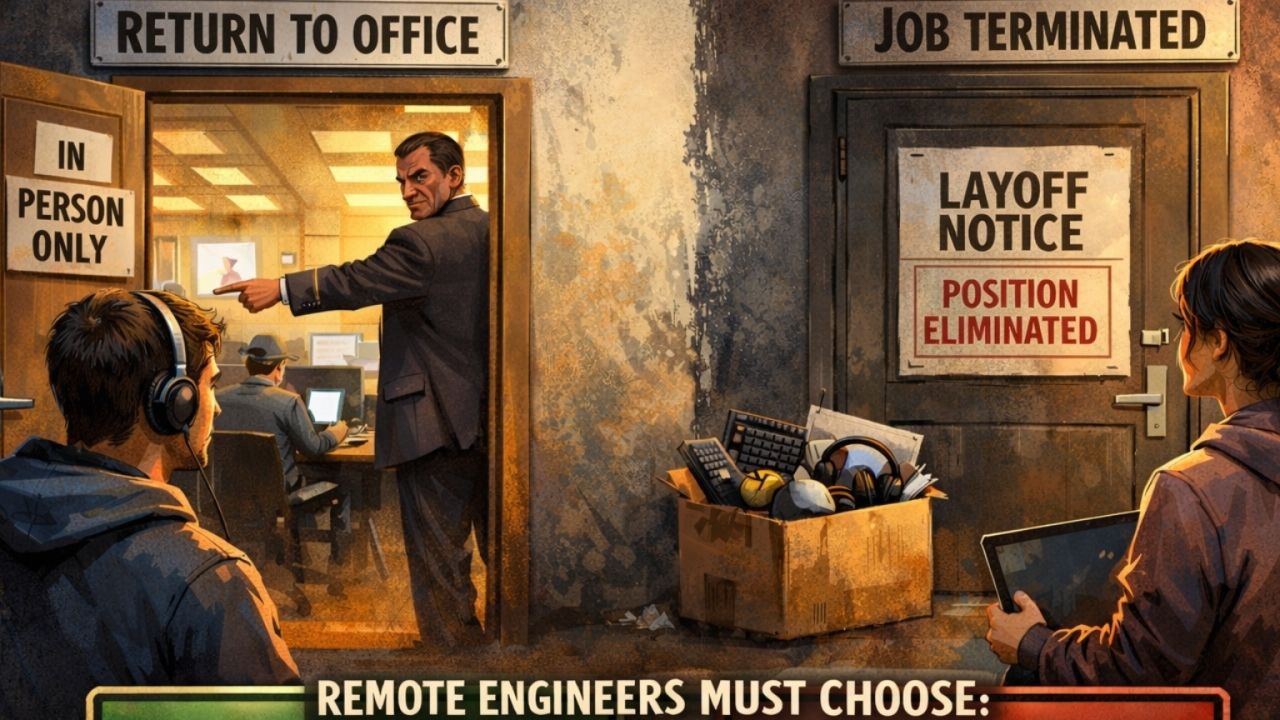
Remote engineering roles aren’t disappearing overnight, but they are being deliberately and strategically reduced.
We’ve seen this trend build year over year since 2022.
Return-to-office mandates, hybrid restructures, and company policy changes have consistently reshaped the tech market. In 2026, this shift is accelerating across all engineering levels, from junior to senior.
This isn’t accidental. And it isn’t just about control.
Remote Work Requires Rare Discipline
Remote productivity isn’t automatic, even for senior engineers.
True remote effectiveness requires years of practiced structure, self-management, and focus. In a world filled with constant digital distraction, only a subset of professionals consistently perform at a high level without physical accountability.
Remote work can work, but it is not for everyone.
It demands discipline, intentional routines, and maturity.
Most organizations are realizing there is a significant difference in production between remote and in-office workers.
Gen Z Needs In-Office Mentorship
The next generation of engineers cannot be developed fully through Slack, Jira, and Zoom.
Early-career engineers learn through proximity. By overhearing design discussions and watching senior engineers debug in real time, they gain context that can’t be captured in documentation alone. This exposure helps them understand how decisions are actually made, not just how they’re recorded.
This kind of learning doesn’t translate well to fully remote environments.
If companies don’t rebuild strong in-office mentorship pipelines now, they’ll feel the consequences five, ten, and fifteen years down the road. Skills gaps compound quietly and expensively.
Many leadership teams see this clearly and are acting accordingly.
The Economics Are Hard to Ignore
There’s also a financial angle at play.
Many companies know that a significant portion of senior engineers will not return to the office, regardless of incentives.
That creates an opportunity to rebalance payroll, reset compensation bands, and reduce long-term costs.
Whether leaders say it publicly or not, the bottom line matters. And remote policy rollbacks are increasingly tied to financial strategy.
The Opportunity for Small and Mid-Size Companies in 2026
Here’s the part that few organizations are thinking about clearly. The unique talent opportunity for small and mid-sized companies to capitalize on remote opportunities.
If you can offer true hybrid flexibility or selective remote arrangements, you suddenly gain access to senior, proven engineers who were previously out of reach. Many of these professionals were earning $300K+ total compensation at large competitors.
Engineers are often more flexible on compensation when remote or hybrid options exist. Many are open to structured on-site schedules such as one week per month or rotating on and off cycles.
Creative models can work, even in embedded, firmware, and hardware-adjacent environments.
The companies that adapt thoughtfully are quietly winning talent they never could before.
Where Remote Hiring Goes Wrong
Offering a remote role isn’t the problem.
How it’s filled is.
Posting a fully remote engineering position online almost guarantees an overwhelming volume of unqualified applicants. It attracts global profiles you legally or practically can’t hire. Strong local talent gets buried. Internal teams end up filtering instead of hiring.
This isn’t a recruiting failure. It’s a strategy failure.
How Strong Teams Are Actually Winning
Top teams are not posting and waiting.
They use targeted LinkedIn outreach to engage the right engineers early.
At the same time, teams track which companies are eliminating remote work and monitor where layoffs or policy shifts are happening.
By engaging senior engineers before those candidates enter the open market, they stay ahead of broader competition.
This is where specialist recruiters provide leverage, not volume.
We stay in constant conversation with the market. We hear changes in real time. And we act before talent becomes visible to everyone else.
Closing Thought
Remote engineering isn’t dead, but it is becoming selective, strategic, and intentional.
For companies willing to think creatively, remote and hybrid flexibility remains one of the strongest talent acquisition advantages available in 2026.
For engineers hoping to stay remote, the best opportunities won’t be found on job boards.
They’ll be found through relationships.
Related Articles