
Spotting Candidate Red Flags Early in 2026
Strong hiring decisions begin long before an offer is extended. In a competitive market where candidates move quickly and employers expect faster impact, hiring teams need clarity, structure, and confidence during every conversation. That clarity depends on spotting candidate red flags early. The fastest way to prevent misalignment, turnover, and onboarding challenges is to identify inconsistencies before they become organizational problems.
Hiring teams across all industries are refining their interview strategies for 2026. Strong job descriptions help set expectations, and a clean interview process builds momentum. Still, none of those steps can overcome the fallout of hiring the wrong person for the wrong reasons. Spotting candidate red flags early protects the team, improves retention, and keeps hiring decisions grounded in reality instead of hope or assumptions.
This approach is not about being suspicious or overly cautious. It is about recognizing patterns that consistently predict poor fit, future performance issues, or short-term tenure. These red flags often appear in subtle cues, unclear answers, inconsistent timelines, or interview behavior that reveals deeper challenges. When interviewers learn how to notice them, they strengthen their decision making and reduce the risk of costly hiring mistakes.
Why Spotting Red Flags Early Matters
A single bad hire has a ripple effect across any team. It affects culture, productivity, collaboration, morale, and workflow stability. Even when a hire eventually works out, the early friction often slows progress and drains leadership attention. Spotting candidate red flags early helps hiring teams protect their momentum and avoid starting relationships with misaligned expectations.
Early detection also improves candidate experience. When interviewers quickly identify mismatches, they can accelerate decisions, close communication loops fast, and avoid dragging candidates through unnecessary steps. Respect goes both ways. Candidates appreciate a process that moves with clarity and intention rather than uncertainty.
From a long-term perspective, the cost of overlooking red flags is significant. It creates the need for additional coaching, escalations, performance management, and sometimes backfilling the role entirely. Hiring teams that notice these signals early remove guesswork from the process. They build stronger, more consistent pipelines and make decisions aligned with long-term team goals.
Red Flags That Commonly Appear During Interviews
The interview conversation is where most red flags emerge. Candidates reveal patterns in how they communicate, how they describe previous experiences, and how they respond when asked to dive deeper into performance or challenges. While not every red flag indicates a deal breaker, each one signals a need for further validation.
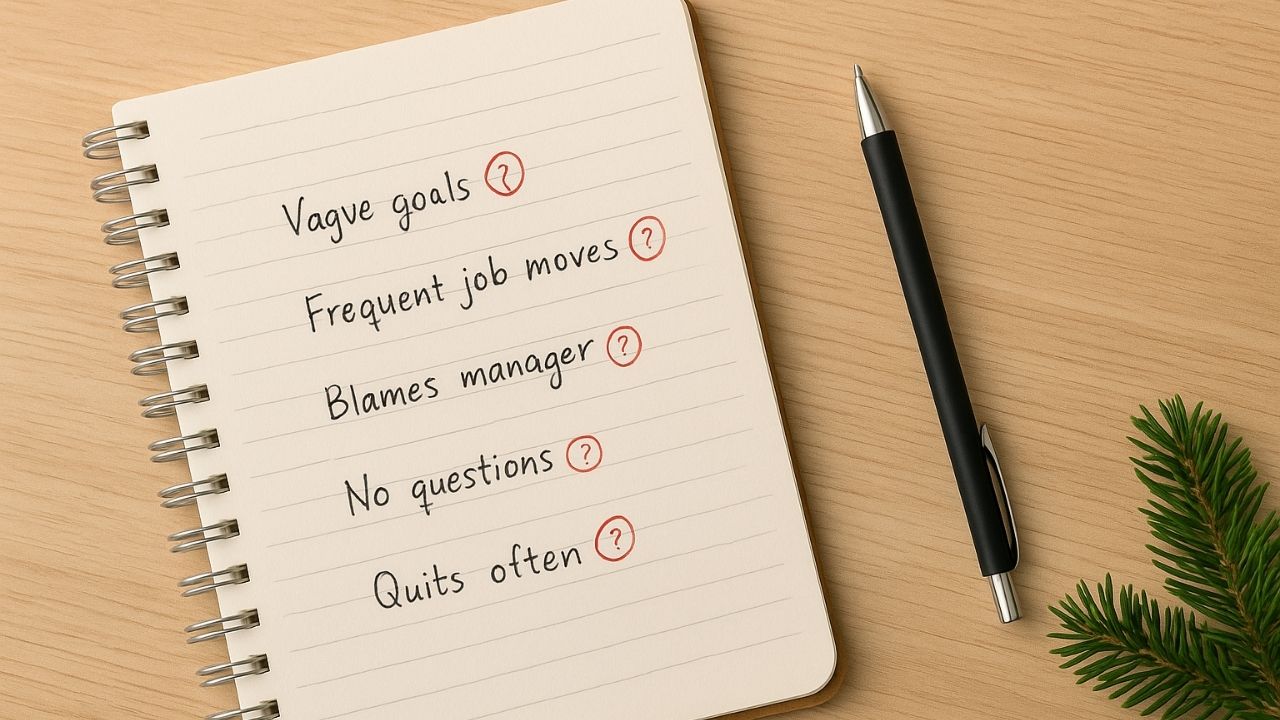
Some of the most common red flags in 2026 hiring include:
Vague descriptions of accomplishments.
Candidates who cannot clearly articulate their impact often struggled to deliver measurable results. Strong candidates speak in specifics.
Inconsistent timelines or unexplained job changes.
Movement across roles is normal, but unclear or defensive explanations often signal deeper issues.
Blame-heavy narratives.
Candidates who frame every challenge as someone else’s fault may struggle with accountability.
No questions about the role.
Engaged candidates ask questions about expectations, culture, challenges, and growth opportunities. Lack of curiosity can signal misalignment or lack of interest.
Overly rehearsed answers.
While preparation is good, overly scripted responses may hide a lack of direct experience.
Difficulty providing examples.
When candidates cannot describe real situations or learning moments, it may indicate low involvement or limited responsibility in past roles.
Spotting candidate red flags early does not mean immediately disqualifying a candidate. It means recognizing when to ask follow-up questions that reveal the truth beneath the surface.
How Behavioral Questions Bring Clarity
One of the best ways to identify misalignment is through behavioral questions. These questions ask candidates to describe specific past experiences. Because the questions focus on real events, they make it more difficult for candidates to provide vague or generic responses.
Examples of strong behavioral questions include:
-
Tell me about a mistake you made and what you learned from the experience.
-
Describe a project that required you to navigate conflicting priorities.
-
Share an example of working with someone who disagreed with your approach and how you handled it.
-
Give an example of a time you improved a process or workflow.
Responses to these questions reveal problem solving, emotional maturity, communication style, ownership, and learning agility. Spotting candidate red flags early becomes easier when the interview structure gives candidates opportunities to demonstrate their thinking rather than simply restating resume highlights.
Evaluating Consistency Across Interview Rounds
Consistency is one of the strongest indicators of candidate quality. When stories, timelines, behavior, or explanations shift between rounds, it often signals uncertainty or embellishment. Hiring teams can identify these inconsistencies through strong interviewer notes, pre-aligned scorecards, and clear decision criteria. This is why structured processes remain essential in 2026.
Across rounds, hiring teams should look for:
-
Stable storytelling
-
Alignment in responsibilities and outcomes
-
Consistent communication style
-
Predictable expectations
-
Confidence in examples shared
Spotting candidate red flags early is easier when multiple interviewers compare their observations. When each round uses aligned evaluation criteria, inconsistencies stand out quickly.
Distinguishing Between Red Flags and Growth Areas
Not all red flags are automatic disqualifiers. Some are simply areas for development. The key is determining whether the red flag affects essential responsibilities or can be addressed through onboarding and coaching.
For example, a candidate who lacks experience with a particular software may be able to ramp quickly. In contrast, a candidate who consistently deflects accountability may struggle regardless of training. Spotting candidate red flags early allows hiring teams to make intentional decisions about risk tolerance, onboarding needs, and long-term role fit.
The Role of Transparency in Identifying Red Flags
Transparent conversations often reveal misalignment faster than structured questions alone. When interviewers openly discuss the challenges and realities of the role, candidates who are not prepared for those challenges often reveal hesitation, discomfort, or overcompensation. This is valuable information.
Examples of transparent prompts include:
-
The first ninety days will require fast learning and high adaptability. How does that align with your working style
-
This team is currently operating with limited resources. How have you worked in similar environments
-
Collaboration is essential here. Tell me about a time you had to build relationships across teams
Transparency encourages authenticity. Authenticity reveals alignment.
Using Red Flags to Strengthen Decision Making
Spotting candidate red flags early is one of the most powerful tools hiring teams can use as they prepare for 2026. It does not replace skill evaluation or cultural alignment, but it provides a more complete picture of who a candidate will be once they join the team. Strong decision making depends on recognizing patterns that predict performance, engagement, and success.
When hiring teams develop the confidence to identify these signals and use them thoughtfully, they make faster, more accurate decisions. The result is a more resilient team, a more efficient pipeline, and better long-term outcomes for both the organization and the candidate.