
Why Structured Interviews Matter More at Senior Levels
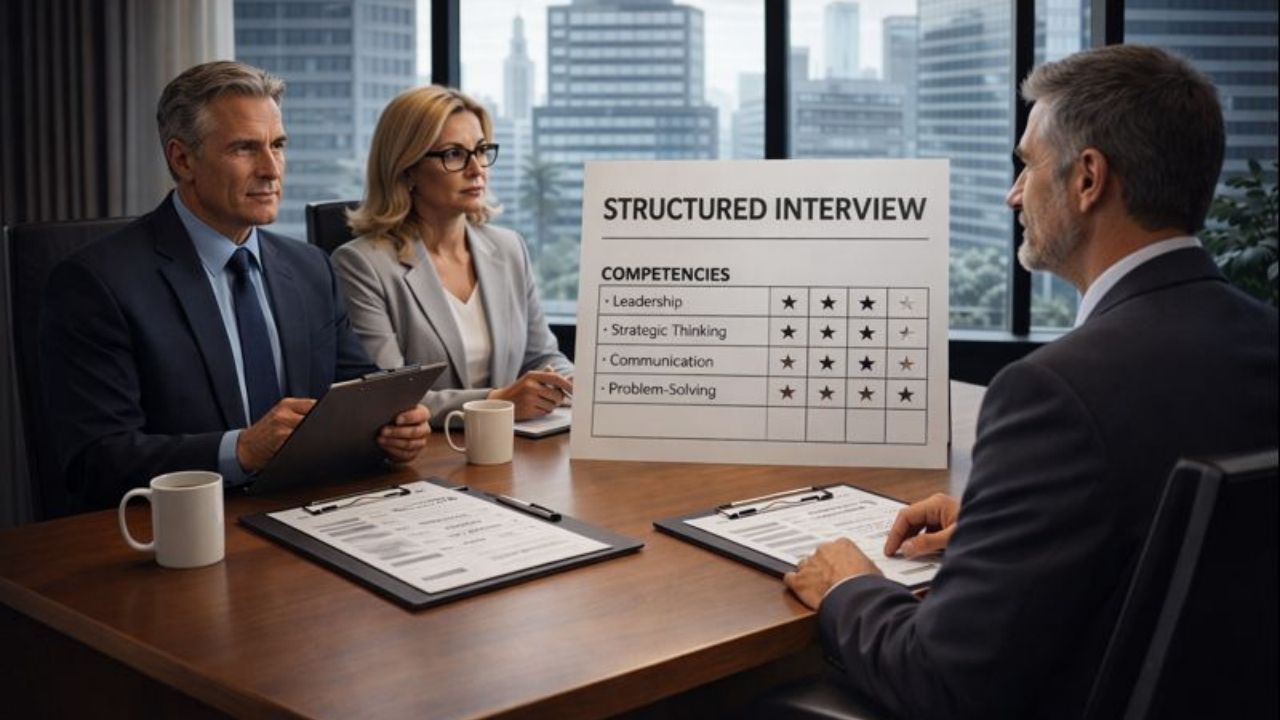
Structured interviews at senior levels are not about control. Instead, they create clarity when decisions carry real weight.
As roles become more complex, the cost of misjudgment increases. Leadership hires affect teams, strategy, and execution. Yet many organizations still rely on informal, conversational interviews to evaluate senior talent. Over time, that mismatch creates risk.
This challenge ties directly to How to Build a Hiring Process That Works for Senior and Specialized Roles, where interview structure determines whether teams gain signal or collect opinions.
Why Structured Interviews at Senior Levels Create Comparable Signal
At senior levels, intuition alone is not enough.
Unstructured interviews generate inconsistent signal. One interviewer evaluates leadership presence. Another focuses on execution depth. A third prioritizes cultural familiarity. Without shared criteria, feedback becomes difficult to compare.
As a result, hiring teams struggle to align.
This breakdown reflects patterns discussed in Where Hiring Processes Break for Specialized Talent, where interviews create activity without improving clarity.
Structured interviews solve this by evaluating candidates against the same expectations rather than individual impressions.
Consistency Builds Decision Confidence
Clear structure improves confidence across the hiring team.
When interviewers assess the same competencies using the same framework, feedback aligns more easily. Hiring managers spend less time reconciling opinions and more time evaluating evidence.
Because of that consistency, decisions move forward with greater confidence.
This directly addresses issues highlighted in Interview Process Volume vs Quality, where adding interviews fails to improve outcomes when signal remains unclear.
Structure Improves the Candidate Experience
Senior candidates expect rigor.
They notice when interviews follow a clear arc. They recognize when questions build on one another instead of repeating. In practice, structure signals seriousness and respect for time.
That experience supports insights from Candidate Confidence in Hiring, where clarity and consistency reinforce trust throughout the process.
When interviews feel disorganized, confidence erodes quickly.
Bias Carries More Risk at Senior Levels
Bias does not disappear with experience. Instead, it becomes harder to detect.
At senior levels, familiarity bias and confirmation bias often influence decisions. Unstructured interviews amplify these risks by allowing conversations to drift toward comfort rather than capability.
Research consistently shows that structured interviews outperform unstructured conversations when evaluating complex roles.
(outbound link: Harvard Business Review or SHRM on structured interviews)
Structure does not remove judgment. Instead, it focuses it.
Fewer Interviews Can Lead to Better Outcomes
Well-designed structure reduces the need for volume.
When interviews are intentional, each conversation adds new signal. Teams require fewer meetings to reach confident decisions. As a result, timelines shorten without sacrificing rigor.
This efficiency aligns with themes from The Hidden Cost of Slow Hiring: Why Speed Matters More Than Ever, where unnecessary delay weakens outcomes.
Structured Does Not Mean Rigid
Structure defines what to evaluate, not how to connect.
Strong interview frameworks still allow for follow-up, nuance, and depth. They simply ensure that every candidate is evaluated on the same fundamentals.
Without structure, interviews reflect personalities more than performance.
Senior Hiring Demands Discipline
At senior levels, structure creates alignment across stakeholders.
It clarifies expectations, supports decision ownership, and reduces debate driven by preference instead of evidence. Over time, that discipline becomes a competitive advantage.
In complex searches, structured interviews are not optional. They are foundational.
Related Articles