
The Hard-Hat Economy: How AI is Flipping the White-Collar Script
MEMORANDUM
TO: Executive Leadership & Board of Directors
FROM: Strategic Workforce & Labor Analytics
DATE: August 7, 2026
SUBJECT: Executive Briefing: AI Infrastructure Expansion & The White-Collar/Blue-Collar Labor Shift
Executive Summary
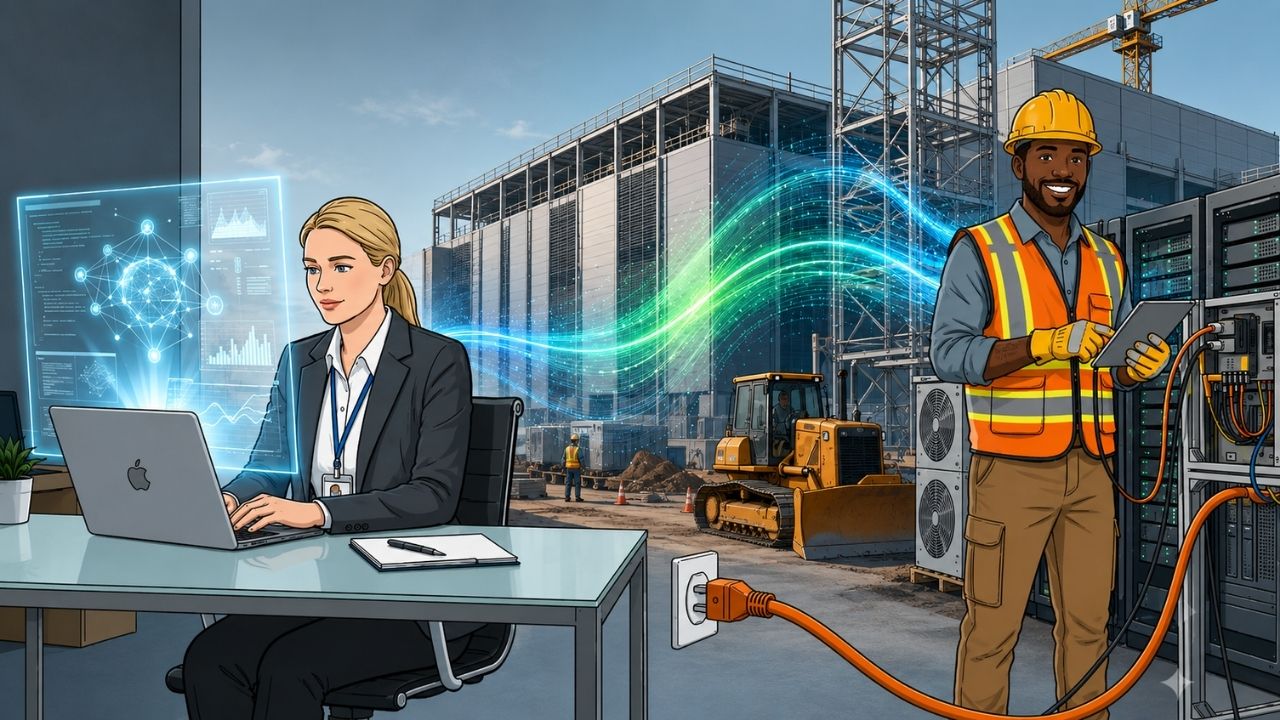
Artificial intelligence is automating entry-level cognitive and administrative tasks. But its rapid expansion relies heavily on physical infrastructure. As a result, this reality is creating an inverted labor market. Demand for traditional entry-level white-collar desk jobs is contracting. At the same time, demand, and earning power, for highly skilled physical trade labor is surging. This same inversion is the subject of Recruiting Manufacturing, Operations, and Construction Talent in Tight Labor Markets
Key Macro Trends & Data Points
1. The Physical Capital Demands of AI Infrastructure
- Capital Expenditure Surge: Major technology hyperscalers (Amazon, Microsoft, Google, Meta) deployed over $200 billion in infrastructure CapEx in 2024 alone. Annual outlays are now projected to surpass $100 billion per enterprise to build out physical capacity.
- Energy Requirements: The International Energy Agency projects global data center power demand to grow from 460 TWh in 2024 to over 1,000 TWh by 2030. Meanwhile, in the U.S., data center energy consumption could reach up to 12% of total national electricity by 2028. That’s up from 4.4% in 2023.
- Construction Cost Allocations: Electrical infrastructure now accounts for 45% to 70% of total data center facility buildouts. That makes specialized trade labor the primary operational bottleneck. This exact bottleneck is covered in WE CAN’T BUILD DATA CENTERS FAST ENOUGH
2. Compression of Entry-Level Office Roles
- Hiring Contraction: U.S. postings for entry-level white-collar roles dropped by 35% over an 18-month period. Organizations automated task-level workflow execution during that stretch, including basic coding, research, and data processing.
- Workforce Restructuring: 40% of employers report plans to trim headcounts in divisions where generative AI replaces routine cognitive tasks.
- Degree Value Shift: 49% of Gen Z job seekers now see a traditional four-year bachelor’s degree differently. They view it as less effective at guaranteeing entry-level corporate career stability. This mismatch is explored further in The Job Market Paradox: Why You Can’t Find a Job, but Companies Can’t Find Workers
3. Deficits & Earnings Expansion in Skilled Trades
- Labor Deficit: The construction and industrial sector faces a gap of up to 499,000 workers. An aging workforce is making that gap worse, with 41% of current construction personnel set to retire by 2031.
- Compensation Growth: Data center construction sites offer wage premiums up to 30% higher than standard commercial projects. Experienced journeyman electricians and thermal cooling HVAC technicians in major tech corridors routinely earn between $120,000 and $200,000 annually. That figure includes overtime. This exact shortage is detailed in The Electrical Engineering Talent Shortage: How Companies Can Adapt and Overcome
Strategic Implications for Enterprise Leadership
- Human Capital Strategy: Organizations must rethink entry-level corporate career paths and reskilling programs, as traditional white-collar talent pipelines contract.
- Vendor & Supply Chain Risk: Enterprise expansion plans relying on data centers, energy grid access, or physical tech deployments will face extended timelines. In turn, increased costs driven by trade labor shortages should be expected.
- Productivity Realignment: Ultimately, the competitive landscape will favor firms that use AI tools to boost operational efficiency. Those same firms will also need to secure access to scarce physical construction and maintenance talent. This same realignment is the focus of The New Era of “Smart Builds”: How AI, Automation & Intelligent Manufacturing are Quietly Reshaping U.S. Construction
Related Articles
Recruiting Manufacturing, Operations, and Construction Talent in Tight Labor Markets
Construction Tech 2025: How Digital Twins, AI & Modular Builds Are Reshaping EPC/MEP Hiring
Industrial Leadership in Transition: Recruiting for Automation and Adaptability