
How Do You Improve Your Offer Acceptance Rates?
Most organizations focus on the offer stage when trying to improve offer acceptance rates, viewing it as the finish line of the hiring process. In reality, the outcome is often determined much earlier.
When a candidate declines an offer, the decision rarely comes as a complete surprise to the candidate. Concerns about compensation, career growth, leadership, work environment, flexibility, or timing usually exist long before the offer is delivered. The problem is that those concerns were never fully uncovered or addressed during the interview process.
This is where pre-closing becomes important. Rather than waiting until the final stages to determine whether a candidate is genuinely interested, strong hiring teams continuously evaluate alignment throughout the process. They seek to understand what is motivating the candidate to consider a move, what concerns might cause hesitation, and what factors will ultimately influence a decision.
Pre-closing is not about selling. It is about clarity. When both sides openly discuss expectations throughout the interview process, there is far less risk of discovering major misalignment after significant time and effort have already been invested.
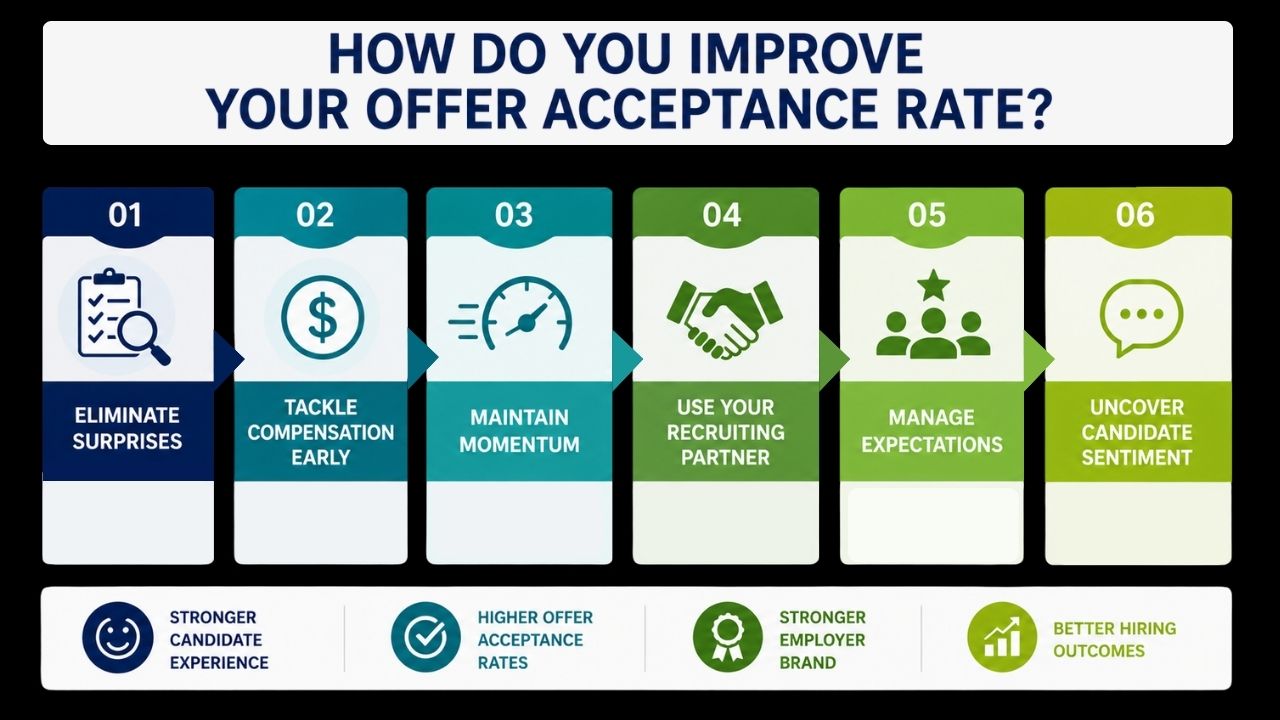
Eliminating Surprises Before the Offer Letter Is Sent
Most declined offers can be traced back to surprises.
Sometimes candidates learn details about the role late in the process that were never discussed during earlier conversations. Other times employers discover that candidates have compensation expectations well above the approved range. Work schedules, travel requirements, reporting structures, relocation expectations, and career growth opportunities can all become points of friction when they surface too late.
The strongest hiring processes eliminate surprises before they have an opportunity to become problems. Expectations are discussed early, validated often, and revisited as the process progresses. Candidates know exactly what the opportunity entails, while employers gain confidence that the candidate understands both the advantages and the realities of the position.
This level of transparency improves the experience for everyone involved. Candidates appreciate knowing where they stand. Employers avoid investing months in a process that was unlikely to succeed from the beginning. Most importantly, the final offer becomes a confirmation of previous conversations rather than the start of a negotiation.
A structured interview process plays a significant role in making this possible. Organizations that consistently evaluate candidate motivations, concerns, and expectations throughout the hiring cycle are far less likely to encounter surprises at the finish line. The principles outlined in The Strategic Hiring Framework: Ultimate Guide to Interviewing Candidates provide a strong foundation for creating that consistency.
Tackling Compensation Transparently in the First Interview
Compensation remains one of the most common reasons candidates decline offers, yet many organizations still hesitate to discuss it early in the process.
Some hiring managers worry that bringing up compensation too soon will make the conversation feel transactional. Others assume there will be plenty of time to address salary once mutual interest has been established. Unfortunately, delaying the discussion often creates more problems than it solves.
Candidates enter the hiring process with assumptions. They have expectations around salary, bonus opportunities, benefits, flexibility, equity, career progression, or work-life balance. Employers frequently have assumptions of their own about what candidates will accept. When neither side addresses those assumptions directly, misalignment quietly grows in the background.
The strongest hiring teams remove that uncertainty early. Compensation does not need to be fully negotiated during the first conversation, but realistic expectations should be established. Understanding whether both parties are operating within a reasonable range prevents wasted time and significantly reduces the risk of losing a candidate after multiple rounds of interviews.
Transparency also builds trust. Candidates are more likely to remain engaged when they feel employers are being honest about expectations from the beginning. By the time an offer is extended, compensation should feel like a continuation of an ongoing discussion rather than a new conversation altogether.
Maintaining Momentum and Hiring Velocity
Even highly interested candidates can lose enthusiasm when a hiring process drags on.
Organizations often underestimate how differently candidates experience time. Internally, a week between interviews may seem reasonable. To a candidate actively considering multiple opportunities, that same week can feel like a lack of urgency or interest. Extended gaps between interviews, delayed feedback, and inconsistent communication create opportunities for doubt to creep into the process.
Top candidates rarely evaluate opportunities in isolation. They are often speaking with multiple employers, exploring internal opportunities, or deciding whether they want to make a move at all. Every unnecessary delay increases the likelihood that another opportunity gains momentum while yours loses it.
Maintaining hiring velocity does not mean rushing decisions. It means removing avoidable delays and keeping candidates informed throughout the process. Clear timelines, prompt feedback, and consistent communication create confidence. Candidates who understand what comes next are far more likely to remain engaged than candidates left wondering whether the organization is still interested.
When employers maintain momentum from the first conversation through the offer stage, acceptance rates tend to improve naturally because candidates remain emotionally invested in the opportunity.
The Role of a Recruiting Partner in Closing Candidates
Many organizations think of recruiting partners primarily as sourcing resources. While finding qualified candidates is certainly part of the job, experienced recruiters often create their greatest value during the later stages of the hiring process.
Candidates are not always comfortable sharing concerns directly with hiring managers. They may worry about appearing difficult, demanding, or disinterested. As a result, concerns about compensation, leadership, relocation, flexibility, competing opportunities, or family considerations often remain hidden until a decision must be made.
An experienced recruiting partner creates an additional communication channel that allows those conversations to happen more naturally. Candidates are often willing to share concerns with a trusted recruiter that they would never bring directly to an employer. That information gives hiring teams an opportunity to address issues before they become reasons for declining an offer.
This is one of the reasons recruiting support can impact far more than candidate flow. Organizations frequently focus on placement fees while overlooking the value of improved communication, expectation management, and candidate engagement. Is It Worth Using a Recruitment Agency? The True ROI for Employers explores the broader business impact of recruiting partnerships in greater detail.
Managing Expectations in a Competitive Talent Market
Candidates have more access to information today than ever before.
Salary data is publicly available. Employer reviews can be found within minutes. Professional networks provide direct access to current and former employees. Candidates often begin forming opinions about an organization long before the first interview takes place.
Because of this, consistency matters. Candidates should hear the same message from recruiters, hiring managers, executives, and interview teams. Conflicting information creates uncertainty, while aligned messaging builds confidence.
Managing expectations does not mean presenting a perfect version of the opportunity. In fact, the opposite is often true. The most successful hiring teams are transparent about both the opportunities and the challenges associated with a role. Candidates who understand what they are walking into are more likely to accept offers and remain successful after joining the organization.
Strong expectation management creates trust, and trust plays a significant role in whether candidates ultimately say yes.
Uncovering True Candidate Sentiment via Third-Party Feedback
One of the biggest mistakes organizations make is assuming enthusiasm equals commitment.
Candidates may enjoy conversations with leadership, express excitement about the role, and perform exceptionally well throughout the interview process while still having reservations about accepting an offer. Those reservations often remain hidden until the final decision must be made.
This is where third-party feedback becomes particularly valuable. Recruiters are often able to gather candid insights regarding a candidate’s level of interest, competing opportunities, concerns, and decision-making criteria. Because the conversation feels less formal, candidates tend to be more transparent.
The ability to uncover those concerns early gives employers options. Questions can be answered. Misunderstandings can be clarified. Expectations can be adjusted. Potential obstacles can be addressed before they become reasons for rejection.
Organizations with consistently strong offer acceptance rates rarely rely on persuasion at the end of the process. Instead, they focus on understanding candidate sentiment throughout the journey. When concerns are identified early and expectations remain aligned, the final offer becomes what it should have been all along: a natural next step rather than a high-stakes negotiation.
Related Articles
The Strategic Hiring Framework: Ultimate Guide to Interviewing Candidates
How to Increase Offer Acceptance: What Today’s Candidates Need to Say Yes
Offer Acceptance Science: Fixing Comp, Comm, and Cadence to Lift Acceptance Rates
Is It Worth Using a Recruitment Agency? The True ROI for Employers