
The Panel Interview: A Candidate’s Guide to Impressing the Whole Room
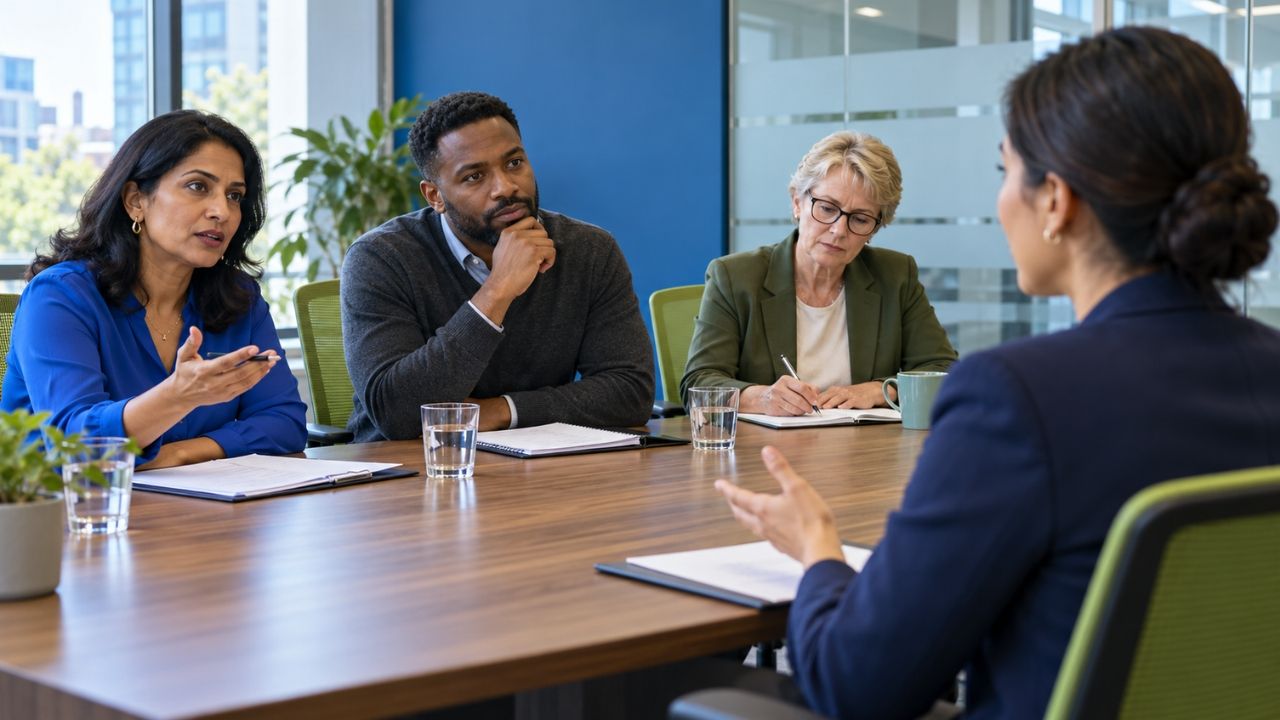
A panel interview puts a candidate in front of several interviewers at once. The setup can feel intimidating, especially for people who prepared for a conversation with one person. Yet a panel interview is also a chance to meet the people who might become colleagues, and to show how the candidate communicates with a group.
This guide explains what a panel interview is, who sits on the panel, which questions to expect, and how to prepare. It also covers how to handle the room, what to ask the panel, and how to follow up with each person.
What Is a Panel Interview?
A panel interview is an interview in which two or more people question the candidate at the same time. Panels often include two to four interviewers, and they usually appear in the second or third round of a hiring process. Employers use them for several reasons. A panel saves time, since the candidate does not repeat the same conversation with five people. It lets several decision-makers form their own impressions at the same moment. It also shows how a candidate handles a group.
Panels take a few common forms. In the most common version, the interviewers take turns asking questions. Some panels also ask the candidate to give a short presentation on a set topic, and others add a job-related task, sometimes on the spot. Asking the recruiter which format to expect is one of the smartest preparation steps.
Who Sits on the Panel
The panel often reflects the people the new hire would work with. A typical mix includes the hiring manager, a member of the HR team, one or two future teammates, and sometimes a leader from another department. Each person looks at the candidate through a different lens.
The hiring manager focuses on role-specific skills and results. Expect the deepest questions about past projects from this person.
The HR representative tends to listen for culture fit, communication, and anything that could raise a concern later.
Team members want to know how the candidate collaborates and whether the person would be easy and productive to work alongside.
A senior or cross-functional leader often weighs strategic thinking, growth potential, and how the candidate would work with other departments.
Knowing these roles helps a candidate tailor answers. A good answer speaks to the person who asked the question and also touches on what the others care about.
How Is a Panel Interview Different From a One-on-One?
The biggest difference is the number of evaluators. In a one-on-one conversation, a candidate can build rapport with a single person and settle into a rhythm. In a panel, the candidate has to connect with several people with different priorities at the same time.
The pace is usually faster, too. Questions come from different directions, and follow-ups are common, because each interviewer wants to probe an area that matters to them. Consistency matters as well, since the panel will compare notes afterward. A candidate who gives the same strong story to everyone, in a way that fits the whole room, makes that comparison easy.
The panel also sees things a single interviewer cannot. They watch how the candidate treats each person, whether the candidate listens, and how the candidate handles interruptions. The hiring manager interview covers the one-on-one version in more detail.
Common Panel Interview Questions
Panels ask many of the same questions as other interviews, but they usually spread them across several topics. Expect versions of the following.
Background and role fit
- “Walk us through your background and why you applied for this role.”
- “What would you focus on in your first 30 days?”
- “What would you bring to this team that we don’t already have?”
Behavioral questions
- “Tell us about a time you had to influence someone who didn’t report to you.”
- “Tell us about a time you handled competing priorities from different stakeholders.”
- “Tell us about a time you made a mistake. What did you learn?”
Collaboration and communication
- “How would your last teammates describe you?”
- “Tell us about a time you disagreed with a decision. What did you do?”
- “Tell us about a time you had to explain a complex idea to a mixed audience.”
Motivation and culture
- “Why do you want to join this company?”
- “What kind of team environment helps you do your best work?”
Many of these are behavioral questions, which ask about real situations from the past. The STAR method, which stands for Situation, Task, Action, and Result, helps keep answers organized. How to answer behavioral interview questions shows how to use it without sounding scripted.
How to Prepare for a Panel Interview
Preparation for a panel starts with information. Ask the recruiter or the scheduling contact who will be on the panel, what each person does, how long the interview will run, and whether there is a presentation or task. Also ask about the location or video link, and whether to bring anything.
Next, research each panelist. Review their LinkedIn profiles, their roles, and any public work they have done. Then match the candidate’s experience to what each person is likely to care about. A hiring manager wants results. An HR leader wants communication and culture fit. A teammate wants to know how the candidate collaborates.
Then prepare four or five strong stories that can answer many different questions. Each story should have a clear situation, a specific action, and a measurable result. Prepare more than one angle on each story, since panelists often ask follow-ups.
Practice out loud with a friend or mentor, and ask them to interrupt with follow-up questions from different directions. This is the best way to rehearse the pace of a panel. Finally, rehearse any presentation until it fits comfortably within the time limit, and print extra copies of the resume in case panelists do not have one.
Handling the Room During the Interview
Panels reward candidates who stay calm and include everyone. A few habits make a large difference.
Start by greeting each person by name during introductions, and write the names down. Then use a simple pattern for each answer. Begin by looking at the person who asked the question. As the answer develops, bring the other panelists into the conversation with your eye contact. Finish by returning to the person who asked. This keeps the answer personal without leaving anyone out.
Keep answers focused, ideally about a minute to a minute and a half. Rambling costs the candidate the attention of the whole room, not just one person. Pause briefly before answering, and ask for clarification if a question is unclear. If a panelist cuts in, decide whether the rest of the point matters. If it does, finish it politely or return to it later.
Watch how the panel reacts. Nodding, leaning in, and note-taking suggest engagement. Furrowed brows or glances between panelists may signal confusion, and a quick offer such as “Would it help if I gave an example?” can fix it. Some panelists stay quiet, and a calm check-in with them now and then keeps them involved. If one panelist challenges an answer, welcome the question instead of getting defensive. If one person dominates, look for a natural moment to include a quieter panelist by asking how their area sees the issue.
If the Panel Meets by Video
Many panels now happen on video, and the video interview guide covers the setup in more detail. The same principles apply here. Test the technology early, place the camera at eye level, and look at the camera when answering so each panelist feels addressed. Keep the names and roles of the panelists on a note beside the screen. Pause slightly longer than usual before answering, since video makes it harder to read when someone is about to speak.
Questions to Ask the Panel
Most panels leave time for the candidate to ask questions, and this is a chance to tailor questions to each person. Ask each panelist something that fits that person’s role. Good options include the following.
- To the hiring manager: “What does success look like in the first 90 days?”
- To a teammate: “What does collaboration look like on this team day to day?”
- To the HR representative: “How does the company support professional growth?”
- To a senior leader: “Where do you see this team’s biggest opportunity over the next year?”
- To the whole panel: “What would you want a new hire to understand about working here?”
Take brief notes during the answers, since they give material for the follow-up notes. Questions candidates should ask during an interview offers more ideas. The way panelists answer, and the way they treat each other, also reveals how the team works. For things to watch for, see interview red flags candidates should never ignore.
Follow Up With Each Panelist
Before leaving, thank everyone and ask for contact details if they were not shared. Then send each panelist a personal thank-you email within a day. Each note should mention something specific that person said, connect the candidate’s experience to a concern they raised, and restate interest in the role.
Do not send one identical message to the whole group. Individual notes feel more thoughtful, and they show attention to detail. Keep each note short, about a paragraph or two. If the panel gave a timeline, follow it. If not, a polite check-in with the primary contact after a reasonable wait is appropriate.
Common Mistakes to Avoid
Several missteps appear again and again in panel interviews. Candidates sometimes talk only to the most senior person or to the person who asked the question, which leaves the rest of the panel out. Others ramble, repeat the same story for every question, or forget panelists’ names. Skipping the thank-you notes is another common mistake.
Preparation prevents most of these. A candidate who knows the panel, has several strong stories, and keeps the whole room involved stands out.
Where the Panel Interview Fits in the Process
A panel usually comes after earlier conversations. The recruiter phone screen confirms the basics, and the hiring manager interview goes deeper into the role. Technical roles often add a technical interview as well, and some employers use a much longer career-history format, covered in the Topgrading interview guide. For senior roles, the final conversation is often the executive interview. The complete interview guide walks through each stage.
Putting It All Together
A panel interview tests preparation and composure. The candidate has to impress several people with different priorities, and has to do it at a steady pace. Knowing the panelists, preparing flexible stories, including everyone in each answer, and following up individually give a candidate a real advantage.
Related Resources