
My 4 Step Framework for Running a Search That Actually Works
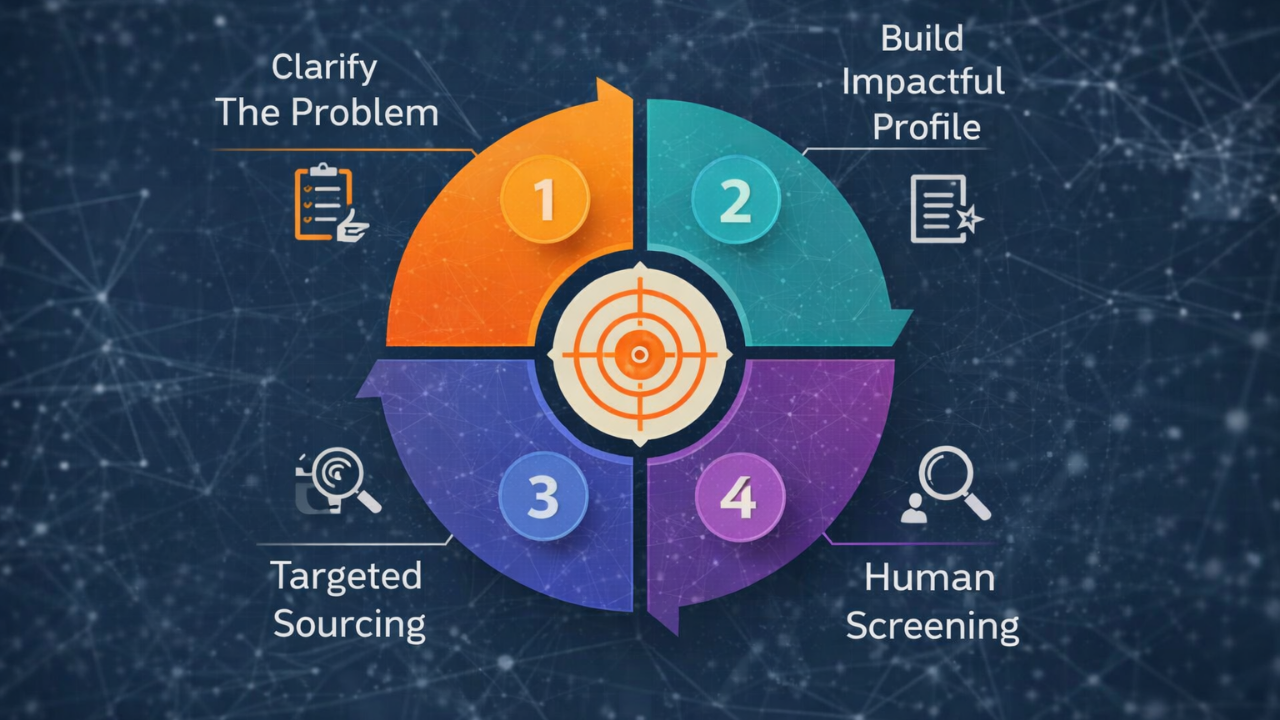
Recruiting Search Framework That Actually Works
If there’s one thing recruiting has taught me, it’s this: chaos loves a hiring process. It sneaks in quietly… messy job descriptions, unclear priorities, last minute pivots, five different people weighing in with seven different opinions.
But over the years, across fintech sprints, energy tech scaling, key hires for portfolio companies, and now agency life, I’ve built a simple rhythm for running searches that stay focused, human, and actually land the right person. No jargon, no spreadsheets that make your eyes cross… just a clean, practical flow that keeps things moving.
Here’s my 4 step framework ~ the one I use every day.
1. Clarify the real problem you’re solving
Before titles… before skills… before sourcing… I always start here:
What business outcome is this hire supposed to drive?
Because “We need a Senior X” is rarely the truth. Often it’s:
A bottleneck someone is quietly drowning in
A gap between where the business is and where it wants to go
A pain point that needs a builder, not a maintainer
Once we name the real problem, the search gets sharper. And candidates feel it too… they can tell when a role is rooted in clarity instead of wishful thinking.
2. Build the profile around impact, not buzzwords
Job descriptions love to list 47 skills. Most of them aren’t dealbreakers.
I flip it.
I ask:
What will this person accomplish in their first 90 to 180 days
What experiences or behaviors have a direct line to that
And which requirements are actually nice to haves that sound impressive on paper
This turns the profile into an impact map, not a scavenger hunt.
And honestly… candidates lean in when they see roles written with intention, not jargon.
3. Source where the signal lives, not where the noise is loudest
Every search has its ecosystem. Instead of blasting job boards and hoping, I go niche.
Depending on the role, this might mean:
Looking for people who have built in similar stages
Finding operators who have thrived in the same market dynamics
Surfacing quiet stars who don’t optimize their LinkedIn but have done the work
Strong searches are less about widening the net and more about aiming it with precision.
4. Run a tight, human screening process
My screens are conversational… thoughtful… and designed to get past the shiny resume bullet points.
I look for:
How a candidate thinks, not just what they have done
Patterns in their decision making
Resilience and adaptability, especially important in scaling environments
Whether the role’s reality matches what they are actually seeking
It’s not an interrogation. It’s a two way vibe check. Candidates should walk away feeling informed, respected, and grounded in what the opportunity really entails.
Related Articles
2 Recruiting Myths Worth Retiring
My Guiding Principles in Every Search
The Toughest Search I Ever Filled and the Lesson It Taught Me