
57 Logos. One Invisible Problem Nobody’s Talking About.
Everyone is celebrating. And they should be.
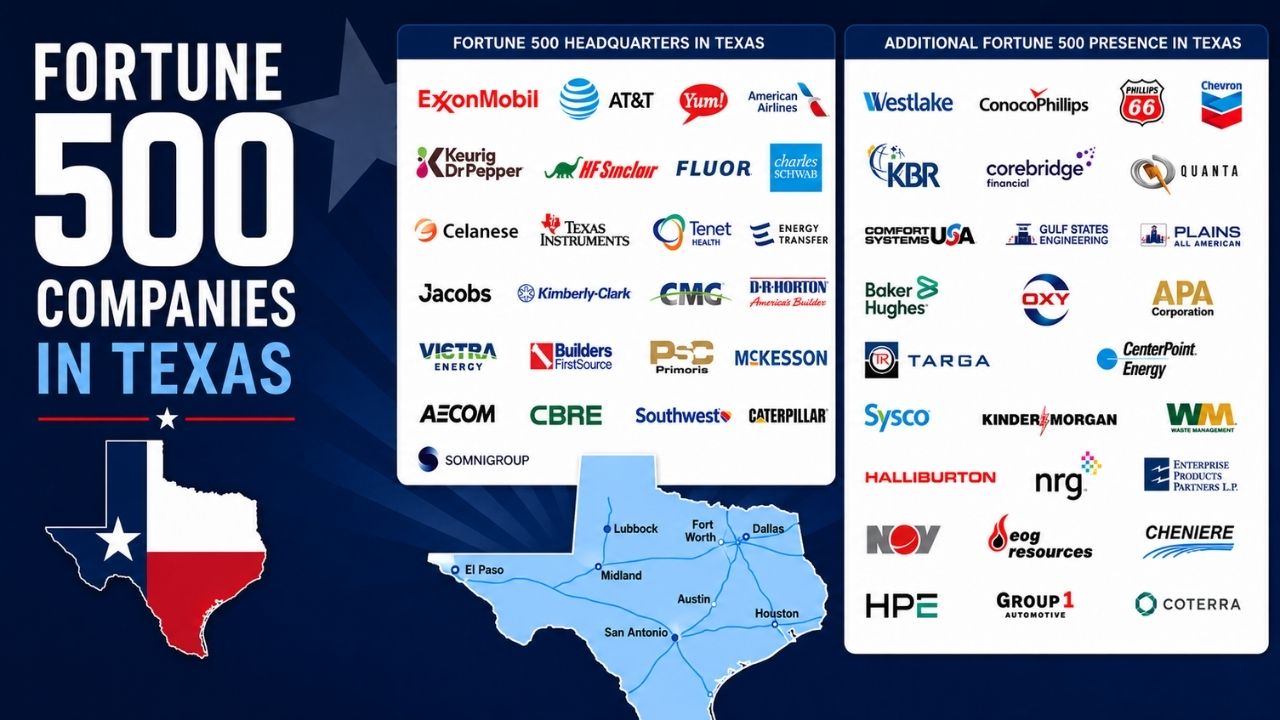
Texas just claimed the #1 spot on the 2026 Fortune 500 list, with 57 corporate headquarters, more than any other state in the nation. More than California. More than New York. $2.8 trillion in combined revenue flying the Lone Star flag.
The graphic is impressive. ExxonMobil. AT&T. D.R. Horton. AECOM. Halliburton. McKesson. CBRE. Builders FirstSource. Primoris. Tesla. Dell. Oracle. And that’s barely scratching the surface.
Go ahead and celebrate. I’ll wait.
Now let me tell you what I see when I look at that list.
I see energy companies that need controls engineers, pipeline operators, and plant managers. Construction firms that cannot find enough project engineers, superintendents, or operations leaders to staff the projects already under contract. Defense and industrial manufacturers competing nationally, sometimes globally, for talent that doesn’t exist in their backyard.
57 companies at the top of a very long iceberg.
Texas didn’t just win a corporate headquarters race. It inherited a talent war.
The Growth Is Real. And It Isn’t Slowing Down
The Dallas Fed projects Texas employment growth at 1.8% in 2026, driven heavily by construction and data center-related activity. DFW has added 450,000 workers this decade and still leads the nation in workforce growth. Eight of the 15 fastest-growing cities in the United States are in Texas. The state is adding roughly 1,600 new residents every single day.
More Fortune 500 relocations are expected, particularly in Dallas, where a new Texas stock exchange is now operating, and the momentum is only building.
AT&T is building a $1.35 billion headquarters campus in Plano. Google committed $40 billion to Texas AI infrastructure. The $1.7 billion Westside Village groundbreaking just happened in Fort Worth.
This isn’t a cycle. This is a structural shift. Texas is becoming the corporate capital of the United States, and the companies moving here are bringing their growth ambitions with them.
Which means the demand for talent, specifically operations, engineering, construction, and manufacturing talent, is only going to intensify. The hiring pressure this creates is something we’ve been watching build for a while in Austin Is Booming. The Workforce Isn’t Ready. And the Clock Is Ticking.
The Texas Talent Pipeline Hasn’t Kept Pace
Here’s where the celebration gets complicated.
Engineering talent shortages across manufacturing, energy, construction, and infrastructure are accelerating across the state. In 2026, Texas companies are rethinking how they attract, evaluate, and deploy engineering talent because the traditional playbook is no longer working. Demand has grown faster than the available talent pool.
This isn’t a headline risk. It’s a ground-level reality I see in every search I run.
A few things are converging:
Retirements are accelerating. The most experienced people, the ones who know the plant, the process, the culture, are walking out the door faster than they can be replaced. In manufacturing and energy, especially, this institutional knowledge loss is severe.
Specialization gaps are widening. It’s not just about headcount. A mechanical generalist doesn’t fill a PLC controls engineer role. A general contractor doesn’t replace a civil PE with water/wastewater experience. The gap is increasingly about depth, not volume.
Geography creates its own pressure. Talent clusters. Engineers, project managers, and operations leaders tend to concentrate in major metros. But the projects, the plants, the infrastructure, the distribution centers, are spread across the state, often in secondary markets where relocation is harder to sell.
Competition has gone national. The companies on that Fortune 500 graphic aren’t just competing with each other. They’re competing with every employer in the country for the same finite pool of experienced professionals. Texas’s growth made it a talent destination. It also made it a talent battleground. This dynamic is part of a broader pattern worth understanding in Most Companies Have a Recruiting Ceiling, And Don’t Realize It.
What This Looks Like on the Ground
I’ve been recruiting in Texas markets, DFW, Austin, and Houston, for years. The patterns I’m seeing right now:
Searches are taking longer. Not because the roles are unclear. Because the qualified, available candidates are fewer. The ones worth calling are already employed, often happily. Getting their attention requires more than a job posting.
Clients are surprised. Many are still operating with a pre-2022 mental model of the market: post a role, screen 30 applicants, make an offer. That market is gone. The companies adjusting their expectations and their strategy are winning. The ones waiting for the old market to come back are stalling projects. That shift connects directly to what we cover in When Manufacturing Hiring Breaks Down Internally.
“Passive” is the new active. The best candidates aren’t on job boards or barely glancing at InMail. Referred. Known in their professional communities. Found, not found by accident.
Compensation is lagging growth. Several markets in Texas have seen significant cost-of-living increases without proportional compensation adjustments in certain job families. That gap creates churn and makes retention harder than it needs to be.
The Companies Getting It Right Are Already Moving
The organizations I see winning the talent game in Texas right now share a few things in common.
They treat talent strategy as a competitive advantage, not a support function. There’s a point of view on employer brand. No waiting until a seat is empty to start thinking about the next one. These organizations are working with partners, like us, who actually know the market, not posting to an aggregator and hoping.
They’re also willing to have honest conversations about compensation, flexibility, and the candidate experience. Because the candidates they want have options. And those candidates are evaluating you as much as you’re evaluating them.
Question Worth Asking
The 57 logos on that map represent some of the most consequential companies in the world. They employ hundreds of thousands of people in Texas. They build, move, power, heal, and connect.
And behind every one of them, somewhere, is an empty seat that matters.
A project that’s delayed. A team that’s stretched. A manager doing two jobs because the search has been open for months.
How Texas companies respond to the talent pressure that comes with being the most sought-after business address in the country will define the next chapter of that growth story. Readiness Is the Real Hiring Bottleneck is worth a read before that window gets any smaller.
What are you doing about it?
RELATED ARTICLES
Austin Is Booming. The Workforce Isn’t Ready. And the Clock Is Ticking.
When Manufacturing Hiring Breaks Down Internally.
Readiness Is the Real Hiring Bottleneck.